
The Complete Maldives Travel Guide
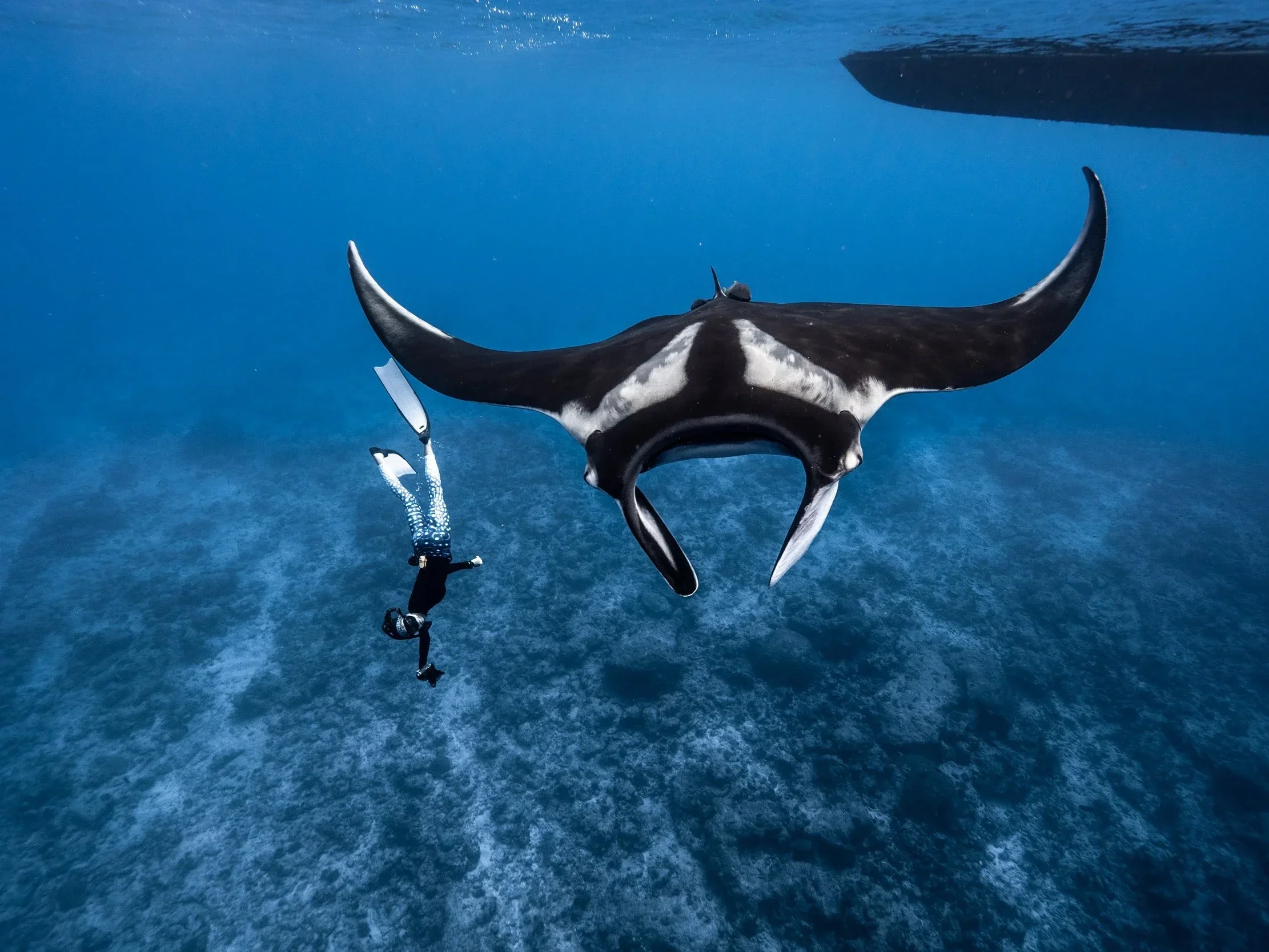
Everything you need to know before visiting one of the world’s greatest marine-wildlife destinations
The Maldives is usually portrayed as a luxury escape built around private villas, infinity pools and perfectly arranged beaches.
But beyond the resorts lies a completely different kind of adventure.
The Maldives is a vast ocean nation of coral atolls, inhabited local islands, protected reefs, deep channels, sandbanks and some of the richest marine ecosystems on Earth. It is one of the few destinations where you can spend the morning searching for the world’s largest fish, snorkel above coral reefs filled with tropical wildlife in the afternoon and watch wild spinner dolphins crossing the ocean at sunset.
For wildlife enthusiasts, South Ari Atoll is particularly special. Its southern marine protected area is one of the rare places in the world where whale sharks can be encountered throughout the year, with islands such as Dhigurah providing excellent access to their habitat.
The Maldives is also more varied than many visitors realise. You can stay on a private resort island, explore aboard a liveaboard, base yourself in the capital or experience everyday Maldivian life on an inhabited local island.
Each option comes with different rules, prices and experiences.
This guide explains when to visit, where to stay, what wildlife you may encounter, how transfers work, what local-island life is like, what to pack and everything else you should understand before travelling.
The Maldives at a glance
Capital: Malé
Main international airport: Velana International Airport
Location: Indian Ocean, southwest of Sri Lanka and India
Official language: Dhivehi
Currency: Maldivian rufiyaa
Religion: Islam
Time zone: Maldives Time
Climate: Tropical and warm throughout the year
Best known for: Coral reefs, whale sharks, manta rays, turtles, dolphins, diving, snorkelling and beaches
Main travel seasons: Drier northeast monsoon and wetter southwest monsoon
Typical transfer methods: Speedboat, public ferry, domestic flight or seaplane
Ideal trip length: Approximately 7–14 days
Travel style: Marine wildlife, snorkelling, diving, family adventure, photography and relaxation
The Maldives comprises almost 1,200 islands extending across hundreds of kilometres of the Indian Ocean, although only a proportion are inhabited or developed for tourism.
Why visit the Maldives?
The Maldives offers far more than beaches.
Its reefs, lagoons and open-ocean channels support an exceptional variety of marine life, including:
Whale sharks
Reef manta rays
Spinner dolphins
Bottlenose dolphins
Green turtles
Hawksbill turtles
Eagle rays
Stingrays
Reef sharks
Nurse sharks
Moray eels
Octopuses
Barracuda
Tuna
Fusiliers
Snappers
Butterflyfish
Angelfish
Surgeonfish
Sweetlips
Anemonefish
Thousands of other reef animals
Official Maldives tourism information describes its waters as supporting more than 2,000 species of marine life, including dolphins, turtles, manta rays and whale sharks.
The country is particularly suitable for:
Wildlife enthusiasts
Snorkellers
Divers
Underwater photographers
Families with confident swimmers
Travellers who enjoy relaxed expeditions
People interested in local-island culture
Anyone dreaming of swimming with whale sharks
Travellers who want adventure without demanding mountain trekking
However, it may be less suitable for someone who dislikes boats, struggles severely with seasickness or expects wildlife sightings to be guaranteed.
The ocean is wild and conditions change daily.
That unpredictability is part of what makes each encounter meaningful.
Understanding the Maldives
The Maldives is not one continuous island.
It is a chain of natural coral atolls divided into administrative regions. Each atoll contains reefs, lagoons, channels, sandbanks and islands separated by open water.
This geography affects every part of your journey.
Two islands that look close on a map may require:
A direct speedboat
A public ferry
A domestic flight
A seaplane
Several separate transfers
An overnight stay near Malé
You should therefore choose your island based on what you want to experience rather than selecting accommodation solely from photographs.
A beautiful island in the wrong atoll may be hours away from the wildlife activity you care about most.
Resort islands versus local islands
One of the most important decisions is whether to stay on a private resort island or an inhabited local island.
Resort islands
A resort normally occupies its own private island.
Resort stays may offer:
Overwater villas
Private beaches
Alcohol
Multiple restaurants
Spas
Water sports
Organised excursions
Fewer restrictions on swimwear
A secluded atmosphere
Premium service
This can be ideal for honeymoons and luxury holidays, but it can be extremely expensive and often provides limited interaction with everyday Maldivian life.
Local islands
Local islands are inhabited communities where Maldivian families live, work, attend school and practise their religion.
They may offer:
Guesthouses
Locally owned restaurants
Public beaches
Designated tourist or bikini beaches
Mosques
Local shops
Community life
More affordable accommodation
Direct access to independent excursion operators
A more authentic cultural experience
Local islands offer a different experience from resorts. You are not separated from the country behind a private-island boundary.
However, local laws and customs apply more visibly.
Alcohol is prohibited on inhabited islands, and visitors should dress modestly away from designated tourist beaches. The Maldives is an Islamic country, and public behaviour should remain respectful, particularly around mosques and during Ramadan.
Whale sharks in the Maldives
Whale sharks are the largest fish on Earth.
Despite their size, they are filter feeders that primarily consume plankton and small organisms. They pose no predatory threat to swimmers, although their immense size and powerful tail mean visitors must always maintain a safe distance.
South Ari Atoll is unusual because whale sharks may be encountered throughout the year. Many of the individuals recorded in the region are juvenile males, and researchers believe the area functions as an important developmental habitat.
Are whale shark sightings guaranteed?
No.
Although the Maldives provides one of the world’s best opportunities, but whale sharks are wild animals moving through an open marine environment.
Sightings depend on:
Ocean conditions
Plankton
Water temperature
Visibility
Currents
Recent animal movement
Boat traffic
The skill of spotters
Weather
Luck
A responsible operator should never promise a guaranteed encounter.
Longer stays improve your chances because they create opportunities to search on several days rather than relying on one excursion.
Your Tarzan Expeditions itinerary includes a dedicated whale shark expedition and further opportunities to revisit productive marine areas later in the trip, depending on weather and wildlife activity.
What happens on a whale shark excursion?
The exact experience varies.
A typical excursion may involve travelling by boat along the outer reef while guides, crew members and spotters scan the water.
Once an animal is located, the guide briefs guests before they enter.
The entry may happen quickly because whale sharks continue swimming and can disappear into deeper water.
You should be ready with:
Mask
Snorkel
Fins
Appropriate swimwear
Rash vest
Camera
Secure straps
Clear understanding of the guide’s instructions
The encounter may last several minutes or only a brief period.
Sometimes the animal remains near the surface. At other times, it dives almost immediately.
There may also be other boats in the area. Ethical behaviour becomes especially important when several groups are trying to view the same animal.
How to swim responsibly with whale sharks
Whale sharks should never be chased, touched, blocked or surrounded.
Follow these principles:
Listen to the guide before entering.
Enter only when instructed.
Do not jump directly in front of the animal.
Never touch the whale shark.
Stay clear of its tail.
Do not use flash photography.
Do not use motorised underwater scooters near it.
Avoid swimming across its path.
Remain calm.
Keep your fins below the surface where possible.
Allow the animal an open route of movement.
Leave the water when instructed.
Never demand that a boat reposition dangerously for a photograph.
The experience should be controlled by the animal, not by the swimmers.
Manta rays in the Maldives
Manta rays are among the most graceful animals in the ocean.
The Maldives supports reef manta rays throughout different atolls and seasons. Their distribution changes with currents, plankton and monsoon patterns.
In South Ari, manta rays can be encountered at feeding areas, reef sites and cleaning stations. Official tourism guidance notes that mantas may be present in South Ari during the northeast monsoon, roughly from October into May, although wildlife patterns can vary.
April can therefore provide opportunities, but no sighting can be guaranteed.
Reef manta rays
Reef manta rays are the species most commonly associated with Maldivian reefs.
They can have enormous wingspans and appear to fly through the water.
They are harmless filter feeders.
Manta ray etiquette
Never touch or chase a manta.
Do not block its path.
Remain still when it approaches.
Avoid diving directly above a cleaning station.
Do not crowd the animal.
Keep noise and splashing to a minimum.
Follow your guide’s positioning instructions.
Never stand on coral while watching.
The best encounters often happen when swimmers remain calm and allow the manta to decide how closely it approaches.
Dolphins
The Maldives is home to several dolphin species.
Spinner dolphins are particularly famous for their acrobatic behaviour and may be seen travelling in large groups.
Possible sightings include:
Spinner dolphins
Bottlenose dolphins
Risso’s dolphins
Pilot whales
Other cetaceans
Wildlife cruises should avoid aggressively pursuing pods.
A responsible captain maintains an appropriate distance, matches direction carefully and allows the animals to choose whether to approach.
Your expedition includes a dedicated dolphin cruise, with additional opportunities to see dolphins while travelling between marine sites.
Sea turtles
Green and hawksbill turtles occur around the Maldives.
Hawksbill turtles are commonly associated with reef habitats, while green turtles often feed around seagrass beds and lagoons.
All sea turtles in the Maldives are protected. Visitors must not touch, chase, feed or interfere with turtles or their nests.
When snorkelling near a turtle:
Keep a respectful distance.
Do not swim directly above it when it needs to surface.
Never grab its shell.
Avoid surrounding it.
Do not follow it into a confined area.
Allow it to rest or feed naturally.
Do not use flash at close range.
A resting turtle may remain in one area for some time when swimmers behave calmly.
Sharks in the Maldives
Sharks are a normal and important part of healthy tropical marine ecosystems.
Common reef encounters may include:
Blacktip reef sharks
Whitetip reef sharks
Grey reef sharks
Nurse sharks
Whale sharks
Reef sharks generally avoid people and are not searching for swimmers as prey.
Seeing them should be considered a sign of a functioning ecosystem rather than an emergency.
Basic precautions include:
Follow local guidance.
Do not enter the water where fish are being cleaned.
Avoid touching or feeding sharks.
Do not pursue resting nurse sharks.
Keep a respectful distance.
Stay calm.
Leave the water when instructed.
Do not wear unsecured shiny objects during specialised shark activities.
Never attempt to stage photographs by handling wildlife.
Coral reefs
The Maldives exists because of coral reefs.
Living coral colonies build complex structures that provide habitat for fish, turtles, rays, sharks, invertebrates and countless other species. Reefs also reduce wave energy and help protect islands from erosion.
Coral is alive and extremely vulnerable to physical damage.
Protecting coral
Never stand on coral.
Do not kick coral with your fins.
Maintain control of your body position.
Avoid dangling camera equipment.
Never break or collect coral.
Do not buy coral souvenirs.
Use reef-conscious sun protection.
Wear a rash vest to reduce reliance on sunscreen.
Do not feed reef fish.
Keep litter and plastics secured.
Follow marked entry routes.
A single careless fin kick can damage growth that took years to develop.
Snorkelling in the Maldives
You do not need to be a scuba diver to experience the Maldives’ marine life.
Snorkelling provides access to shallow reefs, lagoons, channels and surface-dwelling wildlife.
However, conditions vary considerably.
Some locations are calm and protected. Others may have strong currents, waves, boat traffic or deep water.
Do you need to be a strong swimmer?
You should be comfortable in deep water for open-ocean excursions.
Non-swimmers or nervous swimmers may still be able to participate in selected sheltered activities with:
Buoyancy aids
Life jackets
Close guide supervision
Calm lagoons
Appropriate conditions
However, whale shark and manta ray encounters can involve rapid entries, open water, current and swimming to maintain position.
Guests should honestly discuss swimming ability before joining.
Snorkelling equipment
You will normally use:
Mask
Snorkel
Fins
Rash vest
Buoyancy aid where required
Practising before departure can make the experience far more enjoyable.
Learn how to:
Clear water from your mask
Breathe calmly through a snorkel
Use fins efficiently
Enter from a boat
Climb back aboard
Remain horizontal without standing
Signal for assistance
Currents and ocean safety
The ocean is the Maldives’ greatest attraction and its most significant natural hazard.
Currents can be stronger than they appear from the surface.
FCDO guidance warns travellers to take care when swimming, diving and taking part in water sports, to use qualified operators and to ensure suitable insurance is in place.
Always:
Snorkel with a guide or buddy.
Ask about current strength.
Follow the planned entry and exit points.
Stay within sight of the boat.
Do not swim alone after dark.
Avoid channels unless specifically guided.
Wear a buoyancy aid when appropriate.
Tell the guide if you are tired or anxious.
Do not fight directly against a powerful current.
Signal early if you need help.
Never assume shallow-looking water is safe.
Keep children within direct adult supervision.
Strong swimmers can still be moved quickly by ocean current.
Confidence should never replace caution.
Seasickness
Boat travel is central to a Maldives wildlife expedition.
Some crossings are smooth, while others may involve rolling swell or choppy water.
People prone to motion sickness should prepare before departure.
Helpful measures include:
Sitting where the boat moves least
Looking at the horizon
Remaining in fresh air
Avoiding heavy meals immediately before travel
Staying hydrated
Sleeping properly
Taking suitable medication after consulting a pharmacist or doctor
Keeping medication accessible rather than inside checked luggage
Tell the crew early if you feel unwell.
Do not wait until you are severely nauseous.
Diving in the Maldives
The Maldives is one of the world’s best-known diving destinations.
Dive sites may include:
Coral reefs
Thilas or submerged pinnacles
Channels
Cleaning stations
Walls
Wrecks
Drift dives
Shark sites
Manta locations
Diving is not automatically included in a snorkelling expedition and normally requires additional arrangements, certification and insurance.
Never exaggerate your experience to access a more advanced dive.
Currents can be strong, and some sites require confident buoyancy control.
Choose a properly qualified operator and confirm:
Certification requirements
Equipment standards
Emergency oxygen
Staff qualifications
Maximum group sizes
Current conditions
Nearest recompression facilities
Insurance cover
Time required between diving and flying
When is the best time to visit the Maldives?
The Maldives is warm throughout the year.
There are two broad monsoon patterns rather than four European-style seasons.
Northeast monsoon
The northeast monsoon generally brings the drier, sunnier part of the year.
Conditions commonly include:
More sunshine
Lower average rainfall
Calmer conditions in many areas
Strong underwater visibility
Higher visitor demand
Higher accommodation prices
Broadly, this period falls between approximately November and April, although seasonal transitions vary.
Southwest monsoon
The southwest monsoon generally runs from approximately May to October.
Possible conditions include:
More cloud
Short tropical downpours
Increased wind
Rougher seas on some days
Changing visibility
Lower prices
Productive plankton conditions in some regions
Excellent manta activity in particular atolls
The official Maldives destination guide describes the country as warm and sunny throughout the year, with the southwest monsoon bringing increased showers from around May to October.
Is April a good time to visit?
Yes.
April is a transitional month between the drier northeast monsoon and the wetter southwest monsoon.
It can offer:
Warm air temperatures
Warm sea temperatures
Good snorkelling conditions
Strong opportunities for whale sharks in South Ari
Potential manta encounters
Plenty of sunshine
Occasional rain or changing conditions
Increasing humidity later in the month
No month guarantees perfect weather.
Tropical rain may arrive intensely and then clear quickly.
The Tarzan Expeditions trip runs from 12–24 April 2027, combining dedicated wildlife excursions with flexible days that allow the itinerary to respond to conditions.
What happens when the weather is bad?
Marine itineraries must remain flexible.
Wind, waves, rain, current and visibility can affect:
Whale shark searches
Manta excursions
Dolphin cruises
Sandbank visits
Ferry services
Speedboat transfers
Snorkelling locations
Diving
Departure times
A responsible operator may:
Change the activity order
Use a more sheltered reef
Delay departure
Return early
Replace an excursion
Revisit a site on another day
This is not poor organisation.
It is appropriate management of a changing ocean environment.
Getting to the Maldives
Most international visitors arrive at Velana International Airport near Malé.
Flight options vary according to origin and current airline schedules.
Travellers from the United Kingdom commonly connect through:
The Middle East
Europe
India
Sri Lanka
Other regional hubs
Check connection times carefully.
Arriving one day before an important island transfer can provide protection against missed flights, delayed baggage and weather disruption.
The Tarzan Expeditions itinerary begins with arrival in Malé on 12 April, followed by a group transfer towards the main island base the following morning.
Transfers between islands
Island transfers are not the same as ordinary taxis.
They must be coordinated with flight times, weather and regional transport schedules.
Speedboats
Speedboats are common for islands within practical range of Malé or regional airports.
Advantages include:
Direct service
Faster journey
Greater schedule flexibility
Convenient luggage handling
Possible disadvantages include:
Rough conditions
Seasickness
Higher private-transfer cost
Weather disruption
Public ferries
Public ferries are generally cheaper but slower.
They may not operate every day and are more vulnerable to schedule limitations.
Public ferries are useful for flexible independent travellers, but they may be difficult to coordinate with short international connections.
Domestic flights
More distant atolls may require a domestic flight followed by a boat transfer.
Domestic flights usually operate from Velana or the domestic terminal to regional airports.
Allow enough time for:
Terminal movement
Baggage collection
Check-in
Delays
Boat connections
Seaplanes
Seaplanes serve many resorts.
They offer spectacular views but can be expensive, have strict baggage policies and usually operate during daylight hours.
They are not generally the standard method for reaching all local islands.
Maldives entry requirements
Entry rules can change, so travellers should confirm them shortly before departure.
British tourists currently receive a 30-day visa on arrival, provided they meet entry conditions. The passport must remain valid for at least one month from the date of arrival.
Visitors may need to show:
A valid passport
Confirmed accommodation
Return or onward travel
Sufficient funds
Details of the full itinerary
Entry permission for the next destination
Yellow fever documentation when applicable
Final permission to enter remains at the discretion of Maldivian immigration officials.
Travellers of other nationalities should check the rules applying to their own passports.
The IMUGA Traveller Declaration
All foreign travellers must complete the Maldives Traveller Declaration online.
It should be submitted within 96 hours before arrival and is free of charge through the official IMUGA portal.
You will normally need:
Passport details
Flight information
Accommodation information
Travel dates
Personal details
Use only the official government portal.
Do not pay third-party websites to complete a free form.
Children require their own declaration and passport.
Yellow fever requirements
The Maldives does not itself have a yellow fever transmission risk, but proof of vaccination may be required when arriving from a country with yellow fever risk.
The requirement can also apply after a transit exceeding 12 hours in an airport located in a yellow-fever-risk country.
Check the full flight itinerary, including long African airport connections.
Vaccinations and travel health
Arrange a travel-health appointment before departure, ideally several weeks in advance.
The advice you receive may depend on:
Age
Medical history
Previous vaccinations
Length of stay
Accommodation
Planned activities
Pregnancy
Existing medication
Current outbreaks
Make sure routine vaccinations are current.
A clinician may discuss protection against infections such as:
Tetanus
Diphtheria
Polio
Hepatitis A
Typhoid
Other risks based on individual circumstances
TravelHealthPro should be checked again shortly before departure because health guidance and outbreaks can change.
Dengue and mosquitoes
Dengue is transmitted by mosquitoes and occurs in the Maldives.
TravelHealthPro reported increased dengue activity during 2026, with cases recorded across the atolls.
Unlike malaria-carrying mosquitoes, dengue mosquitoes frequently bite during the daytime.
Reduce risk by:
Applying insect repellent
Wearing lightweight long sleeves and trousers
Using screened or air-conditioned rooms where available
Keeping doors closed
Removing standing water where practical
Reapplying repellent after swimming
Seeking medical advice for fever or concerning symptoms
Vaccination against dengue is not suitable or recommended for every traveller, so obtain personalised clinical advice rather than purchasing it solely for a holiday.
Food and water safety
Guesthouses and resorts generally provide bottled or treated water.
Do not assume tap water is suitable for drinking.
Practical precautions include:
Drink sealed or properly treated water.
Check bottle seals.
Use safe water for brushing teeth when advised.
Choose freshly cooked food.
Wash hands before eating.
Be cautious with food left in the heat.
Wash or peel fruit.
Carry oral rehydration salts.
Tell staff clearly about food allergies.
Avoid swallowing seawater.
Fish and rice are central to Maldivian cuisine, while coconut, tuna, curry, flatbreads and tropical fruits are also common.
Vegetarian food is usually available, but remote islands may offer less variety than large resorts.
Guests with serious allergies should provide written information before travelling.
Healthcare and travel insurance
Medical facilities vary greatly between Malé, regional islands and small local communities.
Serious illness, diving injury or marine accident may require transfer by boat or air.
Travel insurance should cover:
The Maldives
All travel dates
Snorkelling
Boat excursions
Kayaking
Paddleboarding
Diving, when applicable
Emergency evacuation
Medical repatriation
Trip cancellation
Missed transfers
Lost baggage
Existing medical conditions
Wildlife activities
Any additional sports
Read the policy wording carefully.
Do not assume that basic travel insurance automatically includes scuba diving or open-ocean excursions.
Is the Maldives safe?
The Maldives is generally visited safely by large numbers of tourists, but it is not free from risk.
Crime levels are typically lower on private resort islands, although theft can still happen.
Malé and Hulhumalé require greater awareness. FCDO advice notes petty crime and incidents of gang-related violence, particularly away from resort areas, and recommends avoiding empty streets after dark.
Practical precautions include:
Keep valuables secure.
Do not leave phones unattended on beaches.
Lock accommodation doors.
Use trusted transfers.
Avoid isolated streets after dark.
Do not display large amounts of cash.
Follow local advice.
Avoid political protests.
Keep copies of travel documents.
Monitor current FCDO advice.
Terrorist attacks cannot be ruled out, and travellers should remain aware of their surroundings and follow local authority guidance.
Local laws and culture
The Maldives is an Islamic country.
Local-island visitors should behave respectfully.
Clothing
On local islands:
Cover shoulders and thighs when walking through the community.
Wear swimwear only on designated tourist beaches or during excursions.
Avoid walking through town shirtless.
Bring lightweight clothing that provides coverage without causing overheating.
Dress particularly respectfully near mosques.
Rules are more relaxed on private resorts, but respectful behaviour remains appropriate.
Alcohol
Alcohol is prohibited on inhabited local islands.
It is generally available only at licensed resort islands or certain authorised vessels. Possessing or consuming alcohol outside authorised locations can result in arrest or deportation.
Do not bring alcohol into the country. Customs rules prohibit its import.
Religion
Public observance of religions other than Islam is restricted.
Visitors should avoid public behaviour that could be interpreted as insulting Islam.
Ramadan
During Ramadan, eating, drinking or smoking publicly during daylight hours outside resorts may cause offence and may breach local rules.
Restaurants and transport schedules may operate differently.
Ramadan is expected to finish before the April 2027 expedition, although dates should be confirmed closer to travel.
Relationships and public affection
Keep public displays of affection restrained, particularly on inhabited islands.
Local laws and attitudes may be more conservative than those in the UK.
Drugs
Drug laws are severe.
Do not carry illegal substances, and confirm requirements before travelling with controlled prescription medication.
Money and payments
The official currency is the Maldivian rufiyaa.
However, US dollars are widely used in tourism.
Cards are accepted by many guesthouses, resorts and excursion providers, but you should not depend entirely on card payments.
Bring:
A payment card with low international fees
A backup card
Some clean US-dollar notes
Local currency for small shops
Emergency funds
Check whether accommodation and excursions add:
Service charge
Goods and services tax
Green tax
Card-processing fees
Transfer fees
A price that initially appears inexpensive may increase substantially once taxes and transport are included.
Tipping
Tipping is appreciated but should reflect the service received.
You may choose to tip:
Boat crews
Snorkelling guides
Dive teams
Guesthouse staff
Drivers
Restaurant staff
Luggage handlers
Your expedition leader can provide guidance based on current local expectations.
Group tipping may be easier for organised excursions.
Internet and mobile signal
Mobile coverage is available on many inhabited islands, although speed and reliability vary.
Wi-Fi may be available at guesthouses but can be slower than visitors expect.
Consider:
Purchasing a local tourist SIM or eSIM
Downloading travel documents in advance
Saving offline maps
Backing up photographs when possible
Bringing enough device storage
Warning family that boat days may involve limited contact
Do not depend on constant internet access while offshore.
Electricity and charging
The Maldives commonly uses British-style Type G plugs, although accommodation may provide universal sockets.
Bring:
Power bank
Multi-port USB charger
Spare camera batteries
Charging cables
Waterproof device pouch
Universal adaptor as backup
Memory-card storage
Salt water is extremely damaging to electronics.
Dry your hands before handling charging equipment and rinse waterproof camera housings with fresh water after use.
What to pack for the Maldives
A Maldives wildlife trip requires more than swimwear.
Clothing
Bring:
Lightweight T-shirts
Long-sleeved sun shirts
Rash vests
Lightweight trousers
Modest shorts
Swimwear
Underwear
Sleepwear
Light rain jacket
Sun hat
Lightweight layer for boats
Clothing that covers shoulders and knees for local-island use
One comfortable travel outfit
Quick-drying fabrics are more practical than heavy cotton.
Footwear
Useful options include:
Sandals
Flip-flops
Lightweight trainers
Reef shoes where appropriate
Do not use reef shoes as permission to stand on coral.
Snorkelling equipment
Equipment may be included, but some guests prefer bringing their own:
Properly fitted mask
Snorkel
Travel fins
Anti-fog solution
Rash vest
Swim leggings
Buoyancy vest when needed
A well-fitting personal mask can transform the experience.
Test it before travelling.
Sun protection
The tropical sun is intense, and reflected light from the ocean increases exposure.
Bring:
High-factor broad-spectrum sunscreen
Lip balm with SPF
Long-sleeved rash vest
Sun hat
Sunglasses
Lightweight cover-up
After-sun treatment
Physical coverage is usually more reliable than repeatedly applying sunscreen in the water.
Health and comfort
Pack:
Personal medication
Seasickness medication
Insect repellent
Oral rehydration salts
Basic pain relief
Antihistamines where suitable
Waterproof plasters
Antiseptic
Hand sanitiser
Travel towel
Reusable water bottle
Earplugs
Small first-aid kit
Obtain professional advice before using new medication.
Photography
Consider:
Underwater camera
Waterproof housing
Floating wrist strap
Spare batteries
Extra memory cards
Lens cloth
Silica-gel packets
Dry bag
Polarising filter for surface photography
Camera rinse kit
Backup storage
Charging bank
A red filter is not always necessary in shallow bright water and can create unnatural colour if used incorrectly.
Underwater photography
The Maldives can be challenging despite its clear-looking water.
You may encounter:
Rapidly moving wildlife
Backscatter
Sun glare
Changing visibility
Current
Other swimmers
Strong contrast
Condensation
Water droplets on the housing
Whale shark photography
Prepare the camera before entering.
Use a wide field of view.
Avoid swimming too close.
Include a person for scale where appropriate.
Do not block the animal for a photograph.
Shoot short bursts rather than staring only at the screen.
Keep the tail outside striking distance.
Do not use flash.
Manta photography
Remain still when possible.
Allow the manta to approach.
Avoid chasing from behind.
Use wide-angle framing.
Photograph natural movement.
Never position yourself above a cleaning station in a way that disrupts behaviour.
Reef photography
Control buoyancy.
Secure loose equipment.
Avoid touching coral.
Approach slowly.
Watch the animal rather than only the camera display.
Respect other snorkellers’ space.
The encounter matters more than the image.
Sandbanks
Sandbanks are temporary or semi-permanent areas of exposed sand surrounded by lagoon water.
They can provide extraordinary swimming, photography and picnic locations.
Conditions change with:
Tide
Wind
Waves
Season
Erosion
Boat traffic
Bring:
Sun protection
Water
Sand-resistant bag
Secure footwear when required
Dry pouch
Towel
Camera protection
There may be no shade whatsoever.
Visitors should remove all waste and avoid disturbing nesting birds or other wildlife.
Your expedition includes both remote sandbank stops and a dedicated private sandbank experience.
Local Maldivian food
Maldivian cuisine is shaped by the ocean.
Tuna, coconut and rice appear frequently.
Possible dishes include:
Mas huni
Roshi flatbread
Fish curry
Garudhiya fish broth
Grilled reef fish
Rice dishes
Coconut-based curries
Fried snacks known as hedhikaa
Tropical fruit
Sweet tea
Local-island menus may also include:
Pasta
Pizza
Rice bowls
Chicken
Burgers
Salads
International breakfast options
Seafood is common, but vegetarian guests can usually be accommodated with advance notice.
Anyone with a fish, shellfish or coconut allergy should communicate it clearly before arrival.
Is the Maldives suitable for children?
The Maldives can be exceptional for adventurous children.
It offers:
Warm water
Wildlife
Beaches
Boat trips
Snorkelling
Educational experiences
Relatively relaxed daily pacing
However, suitability depends on the child.
Consider:
Swimming ability
Confidence in deep water
Seasickness
Ability to follow safety instructions
Comfort wearing a mask and snorkel
Sun tolerance
Boat duration
Respect for wildlife
Patience during searches
Dietary needs
Local-island clothing expectations
The Tarzan Expeditions trip is open to children aged eight and above, reflecting the level of water confidence and maturity expected for the itinerary.
Children should practise snorkelling before travelling.
A swimming pool is enough to learn:
Mask breathing
Snorkel use
Fin movement
Calm floating
Basic hand signals
No child should be pressured to enter open water when frightened.
Is the Maldives only for couples?
No.
The country’s luxury marketing often focuses on honeymoons, but local islands and wildlife expeditions suit:
Families
Solo travellers
Friends
Photographers
Divers
Wildlife enthusiasts
Small groups
Adventure travellers
A group expedition solves one of the Maldives’ biggest challenges for solo travellers: the high cost of private boat excursions.
Shared activities can make whale shark, manta and sandbank trips more affordable and social.
How expensive is the Maldives?
This depends completely on how you travel. The Maldives can be extremely expensive, it can also be very affordable, but the final cost depends heavily on travel style.
Resort travel
Costs may include:
Premium accommodation
Seaplane transfers
Meal plans
Alcohol
Taxes
Water activities
Private excursions
Spa treatments
Local-island travel
Guesthouses can be much more affordable, but you still need to budget for:
Transfers
Excursions
Meals
Taxes
Equipment
Boat hire
Wildlife guides
Optional activities
Marine excursions are often the largest expense.
An organised package can provide clearer budgeting by including accommodation, meals, transfers and activities in advance.
The Tarzan Expeditions package currently includes 12 nights of accommodation, full-board meals, airport transfers, daily activities, equipment and guide fees, with international flights and insurance excluded.
Responsible tourism in the Maldives
The Maldives is exceptionally vulnerable to environmental damage.
Responsible travel should include:
Never touching coral.
Avoiding single-use plastics.
Refilling water where safe systems exist.
Choosing ethical wildlife operators.
Keeping distance from marine animals.
Supporting local businesses.
Respecting island communities.
Conserving fresh water.
Turning off lights and air-conditioning when leaving.
Avoiding seafood from vulnerable species.
Never buying coral, shells or wildlife products.
Removing all waste from sandbanks.
Using reef-conscious sun protection.
Reporting damaged or unsafe marine practices.
Tourism should support the ecosystems and communities that make the experience possible.
Common mistakes to avoid
Choosing the wrong atoll
Do not book solely because an island looks beautiful.
Choose the region based on the wildlife and activities you want.
Expecting guaranteed whale sharks
Although we will try our very best to find them during our expedition, it is not guaranteed.
Wearing swimwear through a local community
Use designated tourist beaches and cover up elsewhere.
Bringing alcohol
Alcohol cannot legally be imported and is prohibited on inhabited islands.
Underestimating the sun
Cloud does not remove UV exposure.
Wear protective clothing and reapply sunscreen.
Standing on coral
Even apparently dead coral can be part of a living reef structure.
Maintain buoyancy.
Ignoring currents
Clear water can conceal powerful movement.
Follow your guide.
Booking a tight same-day international connection
Weather or boat delays can affect transfers.
Allow contingency time.
Travelling without proper insurance
Open-water activities and remote evacuation can be expensive.
Spending the entire encounter behind a camera
Take photographs, then put the camera down and experience the animal.
Our honest verdict: is the Maldives worth visiting?
Yes, absolutely. It’s oe of the most incredible places on earth. But the Maldives becomes much more interesting when you look beyond the overwater villas.
The real Maldives is found underwater and within the communities spread across its islands.
It is the moment a dark shape appears beneath the boat and you realise it is a whale shark. It is watching a manta ray glide beneath you without making a sound. It is floating above a coral reef while turtles feed below, following spinner dolphins across the ocean and walking along an empty sandbank surrounded by nothing but blue water.
It can also be unpredictable.
The sea may be rough. Rain may change the day’s plan. A whale shark may dive seconds before you enter the water. The manta rays may be somewhere else entirely.
Wildlife travel requires patience.
But when the encounter happens naturally, without cages, feeding or guarantees, it becomes far more powerful.
The Maldives is not simply a beach destination.
For the right traveller, it is one of the greatest marine adventures on Earth, and a place you’ll never forget!
Frequently asked questions
What is the best month to visit the Maldives?
The answer depends on the atoll and wildlife you want to encounter. The drier period generally falls between November and April, while May to October brings more rain and wind but can provide excellent wildlife conditions in certain regions.
Is April a good month?
Yes. April is warm and can provide strong snorkelling conditions, year-round whale shark opportunities in South Ari and possible manta encounters.
Can you see whale sharks throughout the year?
South Ari Atoll is one of the rare locations where whale sharks are recorded throughout the year. Sightings remain wild and cannot be guaranteed.
Where is the best place to see whale sharks?
South Ari Marine Protected Area is one of the Maldives’ strongest and most reliable whale shark regions. Dhigurah, Dhangethi and Maamigili are commonly used local-island bases.
Are whale sharks dangerous?
Whale sharks are filter-feeding fish and do not hunt humans. Their size and powerful tail still require swimmers to maintain distance and follow guide instructions.
Can beginners snorkel with whale sharks?
Prepared beginners can participate when conditions and swimming ability are suitable. Open-ocean encounters may involve deep water, waves, current and quick boat entries.
Are manta rays dangerous?
Manta rays are harmless filter feeders. They do not possess the defensive tail barb associated with stingrays.
Are there dangerous sharks?
Reef sharks are a normal part of the ecosystem and generally avoid people. Always follow local safety guidance and never feed or handle sharks.
Do British travellers need a visa?
British tourists currently receive a 30-day visa on arrival if they meet entry conditions. Check official advice again before departure.
Do I need to complete a form before flying?
Yes. The Traveller Declaration must be submitted through IMUGA within 96 hours before arrival. It is free.
Can you drink alcohol on Dhigurah?
No. Dhigurah is an inhabited local island, and alcohol is prohibited. Alcohol is generally limited to licensed resort islands and authorised vessels.
Can you wear a bikini?
Yes, on designated bikini or tourist beaches and during appropriate boat excursions. Cover shoulders and thighs when walking through inhabited areas.
Can you drink tap water?
Visitors should generally use sealed or properly treated drinking water.
What currency is used?
The Maldivian rufiyaa is the official currency, although US dollars are widely accepted in tourism.
Are credit cards accepted?
Many guesthouses and operators accept cards, but carry backup cash and expect possible card fees.
Is the Maldives suitable for children?
Yes, particularly for children who are confident around water, can follow instructions and enjoy wildlife. The Tarzan Expeditions trip accepts children from eight years old.
Do you need to be a scuba diver?
No. Whale sharks, manta rays, turtles and reefs can all be experienced while snorkelling.
Is snorkelling equipment provided?
It is included as part of the Tarzan Expeditions activity and equipment package, although guests may prefer to bring a personally fitted mask.
What happens if the weather is bad?
Activities may be delayed, moved, replaced or reordered. Marine safety and wildlife conditions determine the final programme.
Is there a risk of dengue?
Yes. Dengue occurs in the Maldives, and recent cases have been reported across the atolls. Use mosquito-bite precautions and check current health advice.
Is malaria a concern?
Current country-specific travel-health advice should be checked before departure. A clinician can assess risks based on your full itinerary and any transit countries.
Is the Maldives safe?
Most visits are trouble-free, but travellers should protect valuables, use trusted transfers, avoid isolated streets after dark in Malé and Hulhumalé, and monitor current government advice.
Can I fly a drone?
Drone permission depends on aviation rules, local authorities, accommodation policies and the specific island. Do not fly without obtaining all required approvals, and never disturb wildlife or invade local privacy.
Is Wi-Fi available?
Most accommodation offers Wi-Fi, but speed may vary. Mobile data is generally available on inhabited islands.
What are the emergency numbers?
Ambulance: 102
Fire: 118
Police: 119
Ready to experience the Maldives?
The Maldives is more than turquoise water and white sand.
It is waking on a remote island knowing that somewhere beyond the reef, whale sharks are moving through the open ocean.
It is pulling on your mask as the guide calls you towards the back of the boat. It is watching a manta ray appear from the blue, swimming above coral gardens filled with life and following wild dolphins towards the sunset.
Join the Tarzan Expeditions Maldives Whale Shark Expeditionand experience the islands as part of a small, supportive group of wildlife lovers, families and adventurers.
Your Maldives expedition includes
12 nights of accommodation
Full-board meals
Airport and island transfers
Dedicated whale shark expedition
Manta ray adventure
Dolphin cruise
Protected reef excursion
Multiple snorkelling experiences
Equipment and guide fees
Sandbank experiences
Local-island cultural activities
Flexible final wildlife day
Expedition WhatsApp group
Flight and travel-planning support
A small-group marine adventure
[VIEW THE MALDIVES WHALE SHARK EXPEDITION]
travel insurance
All guests must have suitable travel insurance that covers trekking and adventure activities. We recommend True Traveller because it's designed for adventure travel and we've partnered with them to offer cover.