
How Hard Is Mount Toubkal?
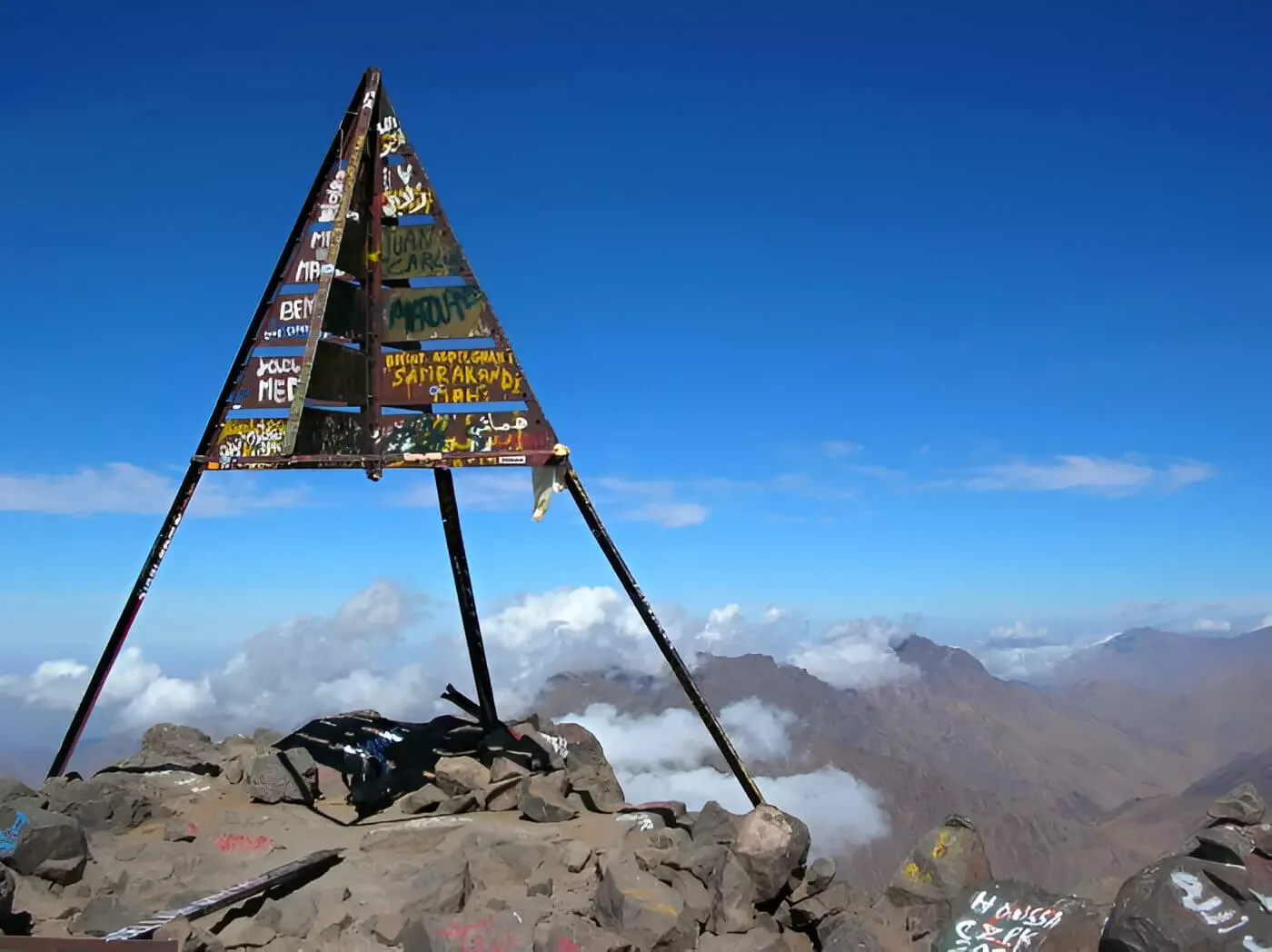
Mount Toubkal is challenging, but it is not a technical climb during normal snow-free conditions.
You do not need to be an experienced mountaineer, rock climber or elite athlete to reach the summit. However, you do need enough fitness to walk uphill for several hours, cope with rough mountain terrain and continue moving when the altitude makes everything feel harder than it normally would.
At 4,167 metres, Mount Toubkal is the highest mountain in Morocco, the Atlas Mountains and North Africa. Most ascents begin in the mountain village of Imlil, at approximately 1,740 metres, before climbing to a refuge at around 3,200 metres and making a final summit attempt the following morning.
The standard route does not usually involve ropes, exposed rock climbing or highly technical mountaineering in the warmer months. The real difficulty comes from the sustained ascent, loose and uneven terrain, long hours on your feet, cold summit conditions and the effects of high altitude.
For most reasonably active people who prepare properly, Mount Toubkal is an achievable first high-altitude summit. But describing it as “easy” would be misleading.
Mount Toubkal difficulty at a glance
Summit altitude: 4,167 metres
Typical starting point: Imlil, approximately 1,740 metres
Mountain-refuge altitude: Approximately 3,200 metres
Total ascent from Imlil: More than 2,400 vertical metres
Technical difficulty in snow-free conditions: Low
Physical difficulty: Moderate to challenging
Altitude difficulty: Significant for some people
Experience required: Previous hiking experience is useful, but not essential
Typical duration: Two or more trekking days
Main challenges: Altitude, sustained ascent, loose terrain, long descent and changing weather
Is Mount Toubkal technically difficult?
In dry, snow-free conditions, the standard route up Mount Toubkal is a trek rather than a technical climb.
There are no sustained sections of vertical rock climbing, and most trekkers will not need ropes, harnesses or specialist climbing techniques. The route mainly consists of established mountain trails, rocky paths, scree and steep uphill walking.
That does not mean every step is easy.
The upper mountain can feel rough and unstable underfoot. Some sections are steep, and the loose rock can make the descent tiring. You need to watch your footing, maintain your balance and be comfortable moving across uneven terrain.
Trekking poles can make a significant difference, particularly during the descent, by improving balance and reducing some of the strain placed on your knees.
During snow-free conditions, you should expect:
Long sections of continuous uphill walking
Rocky and uneven trails
Loose stones and scree
Steep sections approaching the summit
Cold and potentially windy summit conditions
A lengthy descent on tired legs
There may be moments when you use your hands for balance, but under normal dry conditions, the standard route is not generally considered a technical rock climb.
What makes Mount Toubkal difficult?
The mountain’s difficulty comes from several challenges combining at once rather than from one highly technical obstacle.
1. The altitude
At 4,167 metres, the air contains considerably less available oxygen than it does at sea level.
As you climb higher, your normal walking pace may begin to feel unexpectedly demanding. Your breathing becomes heavier, your legs can feel slower and even simple uphill movement requires more effort.
Some people experience:
Headaches
Reduced appetite
Nausea
Dizziness
Unusual tiredness
Disturbed sleep
Shortness of breath
A noticeable reduction in pace
Fitness does not make anyone immune to altitude sickness. A very fit person can experience symptoms while someone with average fitness may feel relatively comfortable.
The best defence is a sensible itinerary, gradual ascent, proper hydration, steady pacing and honest communication with your guide.
Any worsening or concerning symptoms must be taken seriously. Severe altitude illness can be life-threatening, and descending is the definitive response when symptoms indicate that continuing is unsafe.
2. The total amount of ascent
Imlil sits at approximately 1,740 metres, while Mount Toubkal’s summit stands at 4,167 metres.
That means reaching the summit involves gaining more than 2,400 vertical metres from the village, although the ascent is normally divided by an overnight stay at a mountain refuge.
The first trekking day is usually a sustained climb from Imlil towards the refuge. The summit stage then adds almost another 1,000 metres of ascent from the refuge to the top.
A thousand metres of ascent at altitude feels very different from the same amount of climbing at sea level.
There are few completely flat sections on the standard route. Much of the journey involves continuously gaining or losing elevation.
3. Summit morning
Most summit attempts begin during the night or before sunrise.
You may start walking while it is still dark, wearing a headtorch and several layers against the cold. The early start, reduced sleep, altitude and steep terrain can make the first part of the morning mentally demanding.
The final summit ascent usually takes several hours, depending on the group’s speed, mountain conditions and how each person is responding to the altitude. Estimates commonly place the ascent from the refuge at approximately four to five hours, followed by a shorter return to the refuge.
The psychological challenge is simple: you can see the mountain rising above you, but progress at altitude can feel slow.
This is where pacing matters. Trying to maintain your normal low-altitude hiking speed is one of the fastest ways to exhaust yourself.
4. The descent
Many first-time trekkers focus entirely on reaching the summit and underestimate the journey back down.
Descending loose mountain terrain can be hard on the knees, thighs and ankles. Your legs are already tired, concentration can begin to fade, and loose stones require you to remain careful with every step.
On shorter itineraries, trekkers may descend from the summit to the refuge and then continue much farther down the valley. That can make the second day particularly long. Some two-day itineraries involve almost 1,000 metres of ascent followed by more than 2,000 metres of descent on summit day.
Reaching the summit is only half the challenge. You still need enough energy and concentration to descend safely.
5. The weather
Mount Toubkal is in Morocco, but that does not mean it will be warm at 4,167 metres.
Mountain weather can change quickly. Temperatures before sunrise can be very cold, particularly when combined with strong wind. Conditions at the summit can be dramatically different from those in Imlil or Marrakech.
Even during generally favourable trekking months, you should be prepared for:
Cold early mornings
Strong wind
Intense sunlight
Rapid temperature changes
Rain lower on the route
Occasional snow or ice higher on the mountain
The temperature difference between the valley and summit means an effective layering system is essential.
Can beginners climb Mount Toubkal?
Yes. Mount Toubkal can be suitable for beginners, provided they understand what kind of beginner it is suitable for.
You do not need previous high-altitude mountaineering experience. You do need the willingness and physical ability to walk for several hours across consecutive days.
A suitable beginner might be someone who:
Exercises regularly
Can comfortably walk for several hours
Is prepared to train before travelling
Has no major difficulty walking uphill
Is comfortable on rough outdoor terrain
Can follow instructions and maintain a steady pace
Understands that reaching the summit is never guaranteed
A complete beginner who has done no preparation, rarely walks and has never spent several hours exercising continuously is likely to find the mountain significantly harder.
Toubkal is often chosen as a first 4,000-metre summit precisely because the normal route is relatively accessible and non-technical. However, “beginner-friendly” should never be confused with effortless.
How fit do you need to be?
You do not need elite endurance, but you should have a reasonable level of cardiovascular fitness and leg endurance.
A good benchmark is being able to complete a five- to seven-hour hilly walk while carrying a light backpack and still feeling capable of walking again the following day.
You should ideally be comfortable with:
Several hours of continuous movement
Long uphill sections
Repeated climbs or stair sessions
Carrying a small daypack
Training on consecutive days
Continuing at a steady pace when tired
Your training should prepare you for duration rather than speed.
Running a fast 5K can demonstrate good cardiovascular fitness, but it does not automatically prepare your feet, knees, calves and shoulders for a long mountain day. The most useful preparation is sustained uphill movement.
Useful training activities include:
Hill walking
Stair climbing
Incline treadmill walking
StairMaster sessions
Step-ups
Lunges and split squats
Long walks while carrying a backpack
Consecutive-day hikes
Consistency is more important than completing occasional extreme sessions.
A simple Toubkal fitness test
Before travelling, you should ideally be able to complete the following:
Walk continuously for at least four hours.
Complete a route containing repeated hills or significant elevation.
Carry a daypack weighing approximately 5–7 kilograms.
Finish without severe knee, foot or back pain.
Remain capable of completing another moderate walk the following day.
Passing this test cannot guarantee that you will summit because it does not reproduce high altitude. It does, however, provide a useful indication that your basic endurance and muscular conditioning are appropriate.
Do you need previous hiking experience?
Previous hiking experience is helpful, but it is not mandatory on a professionally guided ascent in favourable conditions.
Experience makes several parts of the expedition easier. You are more likely to understand:
How to pace yourself
How much water to drink
Which layers to remove or add
How your footwear behaves over long distances
How to manage minor discomfort
How to walk efficiently on loose terrain
How your body responds to several hours of ascent
Someone without hiking experience should complete several substantial training walks before travelling.
Your first time wearing your boots, carrying a backpack or using trekking poles should not be on the mountain.
Is Mount Toubkal harder than Kilimanjaro?
Kilimanjaro is generally the larger and more demanding overall expedition.
Its summit is substantially higher at 5,895 metres, and most routes involve considerably more days on the mountain. The altitude is more severe, summit night is longer, and the expedition demands repeated days of trekking.
Toubkal is lower and can be completed in a much shorter period. However, the short itinerary can also mean gaining altitude rapidly, giving your body less time to acclimatise.
A useful comparison is:
Mount Toubkal
Lower summit
Shorter expedition
Less severe altitude
Fewer trekking days
Rapid elevation gain
Long and demanding descent
Good introduction to high-altitude trekking
Kilimanjaro
Much higher summit
Longer expedition
Greater altitude challenge
More consecutive trekking days
Longer summit attempt
Greater physical and mental commitment
Toubkal is excellent preparation for Kilimanjaro, but successfully climbing Toubkal does not make Kilimanjaro automatic.
Is Mount Toubkal harder than a normal UK mountain?
For most people, yes.
The standard route may not be dramatically more technical than many British mountain walks in dry conditions, but Toubkal is much higher and generally involves considerably more total ascent.
Ben Nevis reaches 1,345 metres. Yr Wyddfa, also known as Snowdon, reaches 1,085 metres. Toubkal rises to 4,167 metres.
The key difference is altitude. At more than 4,000 metres, your usual pace can become difficult to maintain, recovery feels slower and the consequences of poor preparation are greater.
A strong day on a UK mountain is useful training, but it does not recreate the physiological effects of Toubkal’s altitude.
What does the standard route involve?
Most climbers approach Mount Toubkal through Imlil in the High Atlas Mountains.
The standard journey normally follows the valley through or near Aroumd and continues towards Sidi Chamharouch before climbing to one of the mountain refuges at approximately 3,200 metres. The summit is then attempted from the refuge.
Imlil to the refuge
The first major trekking day is a sustained ascent through the valley.
The lower trail passes mountain communities, terraced slopes and areas where mules carry supplies. As the route climbs, the scenery becomes increasingly barren and mountainous.
This day is not technically difficult, but the amount of ascent means it should not be underestimated.
Refuge to the summit
The summit attempt usually begins before dawn.
The route becomes steeper, rockier and more exposed to the weather. Your pace will normally slow as you climb higher. After reaching the summit, you descend by the same general route to the refuge.
Depending on the itinerary, you may then continue towards Imlil or spend additional time in the mountains.
How long does it take to climb Mount Toubkal?
A standard ascent is often completed over two trekking days, although a longer itinerary can provide a more enjoyable pace and additional time in the region.
A typical two-day outline is:
Day one
Imlil to the mountain refuge.
Expect approximately five to seven hours of trekking, depending on pace, stops and exact starting point.
Day two
Refuge to the summit, return to the refuge and descend towards Imlil.
This can become a very long day, especially when the full descent is completed immediately after the summit.
Longer itineraries may include acclimatisation walks, neighbouring valleys, Berber villages or additional mountain time. These options reduce the feeling of rushing and create a more complete High Atlas experience.
How does altitude affect the climb?
Altitude affects everyone differently.
At approximately 2,500 metres and above, some people begin noticing changes in breathing, sleep or energy. By the time you reach the refuge at around 3,200 metres, the reduced availability of oxygen is much more noticeable.
You may find that:
Your resting breathing rate increases
Walking uphill requires more concentration
Your heart rate rises faster
Your appetite decreases
Sleep becomes lighter
You need more frequent rests
Mild symptoms do not automatically mean that your climb is over. However, symptoms must be monitored, and continuing upward with worsening altitude illness can be dangerous.
Never hide symptoms because you are worried about disappointing the group.
A responsible guide would rather turn someone around early than allow a manageable situation to become an emergency.
Does being very fit prevent altitude sickness?
No.
Physical fitness helps you manage the workload, but it does not guarantee successful acclimatisation.
In fact, highly fit trekkers sometimes create problems by ascending too quickly because they feel capable of maintaining a faster pace. Your lungs and legs may be strong, but your body still needs time to adapt to lower oxygen levels.
The correct pace on Toubkal often feels deliberately slow.
Walk steadily, breathe rhythmically and resist the urge to race ahead.
What is the hardest part of Mount Toubkal?
This depends on the individual, but most people struggle with one of four things:
The final summit climb
The combination of darkness, cold, steep terrain and altitude makes this the most obvious challenge.
The long descent
Tired legs, loose rocks and repeated downhill impact can make the return harder than expected.
Sleeping at the refuge
Mountain refuges are functional rather than luxurious. Shared sleeping spaces, altitude and anticipation can make sleep difficult.
The mental battle
Progress can feel slow at altitude. The summit may appear close while still requiring considerable effort. Remaining patient and focusing on one section at a time is often more useful than repeatedly looking towards the top.
What is the mountain refuge like?
The refuge provides a practical base for summit attempts rather than a luxury mountain hotel.
You should be prepared for:
Shared sleeping areas
Basic washing facilities
Limited privacy
Other groups arriving and departing
Early alarms
Cold nighttime temperatures
Simple mountain meals
Interrupted sleep
Bring earplugs and keep the essential equipment for summit morning organised before going to bed.
You do not want to search through your entire backpack for gloves or a headtorch in a dark shared room.
Do you need a guide to climb Mount Toubkal?
Trekkers should plan to climb with a licensed local mountain guide.
Guide requirements have been enforced in the Toubkal region through checkpoints on the approach to the mountain, and travellers without an approved guide may be turned back. Current arrangements should always be confirmed before departure because local access rules can change.
Beyond the access requirement, a good guide adds considerable value by:
Controlling the group’s pace
Monitoring weather and route conditions
Recognising signs of altitude illness
Navigating in darkness or poor visibility
Managing emergencies
Coordinating refuge arrangements
Sharing local knowledge
Supporting the High Atlas economy
Your guide should be treated as the final authority on whether it is safe to continue.
Can Mount Toubkal be climbed all year?
Toubkal can be climbed during different seasons, but the nature of the mountain changes significantly.
Late spring to autumn
The standard route is often largely snow-free, making this the most accessible period for trekking.
Conditions can still be cold and windy at the summit, and isolated snow or ice may remain depending on the year.
Winter and early spring
Snow and ice can make the ascent significantly more technical.
Crampons, an ice axe, winter-compatible boots and the knowledge to use them may be required. Poor visibility, freezing temperatures and avalanche conditions can make the mountain much more serious.
A straightforward summer trek should never be used as evidence that a person is ready for a winter ascent.
Always follow current advice from qualified local guides because mountain conditions do not follow exact calendar dates.
What equipment do you need?
Your exact packing list will depend on the season, but a snow-free ascent normally requires:
Worn-in hiking boots
Comfortable hiking socks
Small trekking backpack
Waterproof jacket
Warm insulated layer
Hiking trousers
Thermal or moisture-wicking base layer
Warm hat
Gloves
Sun hat
Sunglasses
High-factor sunscreen
Headtorch
Water bottles or hydration system
Trekking poles
Personal medication
Basic toiletries
Snacks
Sleeping-bag liner if required by the refuge
Spare dry layers
Cotton clothing is generally a poor choice for cold mountain conditions because it retains moisture and dries slowly.
Read our complete Mount Toubkal Packing List before deciding what to bring.
What footwear should you use?
For a snow-free ascent, sturdy hiking boots or robust hiking shoes with good grip may be suitable, depending on the conditions and the individual.
Boots offer more ankle protection and may provide greater confidence on loose terrain. Shoes may feel lighter but provide less protection from rocks, cold and water.
The most important factors are:
Proper fit
Reliable grip
Comfort over several hours
Enough room for your toes during descents
No significant heel movement
Experience wearing them before the expedition
Do not arrive with brand-new footwear.
A technically excellent boot that causes blisters is the wrong boot for you.
Winter ascents may require stiffer, insulated boots compatible with crampons.
Is Mount Toubkal dangerous?
Any high mountain involves risk.
The normal route in favourable conditions is relatively accessible, but the altitude, weather, loose terrain and remote environment mean accidents and medical problems can still occur.
Potential hazards include:
Altitude illness
Slips and falls
Dehydration
Sun exposure
Hypothermia
Sudden weather changes
Exhaustion
Rockfall
Snow and ice
Poor decision-making caused by summit pressure
Risk is reduced through preparation, suitable equipment, professional guidance, conservative decisions and appropriate travel insurance.
UK travellers should check current FCDO advice before travelling and ensure their insurance specifically covers trekking to the maximum altitude reached, along with emergency evacuation where applicable.
What happens if you cannot reach the summit?
Turning around is not failure.
Weather, mountain conditions, illness, injury or altitude symptoms may prevent someone from reaching the top. No reputable expedition should guarantee a summit.
Your safety and the group’s safety matter more than standing beside the summit marker.
Mountains do not care how much you trained, how far you travelled or how badly you want the photograph. Knowing when to turn around is part of becoming a capable mountain traveller.
You will still have trekked through the High Atlas, experienced Berber mountain culture and reached an altitude that most people will never visit.
How should you train for Mount Toubkal?
A structured training period of around eight to twelve weeks will be suitable for many people, although your starting fitness and medical circumstances matter.
The most important elements are:
Cardiovascular endurance
Use hill walking, running, cycling, incline treadmill sessions or the StairMaster to improve your ability to work continuously.
Leg strength
Prioritise movements such as:
Squats
Split squats
Step-ups
Walking lunges
Calf raises
Romanian deadlifts
You do not need to lift extremely heavy weights. The goal is to build durable legs capable of repeating thousands of steps.
Descending strength
Controlled step-downs, lunges and long outdoor walks help prepare your quadriceps and knees for the descent.
Backpack conditioning
Complete some walks wearing the backpack and footwear you intend to use.
Consecutive-day activity
Occasionally train on two consecutive days. Your body must become comfortable starting another session before it feels completely recovered from the previous one.
Read our complete Mount Toubkal Training Plan for a week-by-week programme.
Can children climb Mount Toubkal?
Some capable and experienced children have reached the summit, but suitability should be assessed individually.
Age alone does not determine readiness. Consider:
Previous hiking experience
Emotional maturity
Ability to communicate symptoms
Comfort in basic accommodation
Response to cold and tiredness
Genuine personal motivation
Current health
The itinerary’s acclimatisation profile
Advice from medical professionals and local guides
Children should never be pressured to continue because an adult wants the summit.
Families should choose a conservative itinerary and obtain appropriate medical guidance before taking a child to high altitude.
Our honest verdict: how hard is Mount Toubkal?
Mount Toubkal is harder than an ordinary day hike but more accessible than many famous high-altitude summits.
In favourable snow-free conditions, its standard route is not highly technical. The challenge comes from gaining more than 2,400 metres of elevation from Imlil, walking for long periods, dealing with rough terrain and functioning above 4,000 metres.
We would rate it as:
Technical difficulty: 2/5
Physical difficulty: 3.5/5
Altitude difficulty: 3.5/5
Mental difficulty: 3/5
Overall: Moderate to challenging
A reasonably active beginner who trains consistently, uses suitable equipment and joins a professionally guided group has a realistic chance of reaching the summit.
Someone who arrives unprepared because they have heard that Toubkal is “easy” may have a very different experience.
Respect the altitude, prepare your legs and lungs, and never allow reaching the summit to become more important than returning safely.What makes Mount Toubkal difficult?
The mountain’s difficulty comes from several challenges combining at once rather than from one highly technical obstacle.
1. The altitude
At 4,167 metres, the air contains considerably less available oxygen than it does at sea level.
As you climb higher, your normal walking pace may begin to feel unexpectedly demanding. Your breathing becomes heavier, your legs can feel slower and even simple uphill movement requires more effort.
Some people experience:
Headaches
Reduced appetite
Nausea
Dizziness
Unusual tiredness
Disturbed sleep
Shortness of breath
A noticeable reduction in pace
Fitness does not make anyone immune to altitude sickness. A very fit person can experience symptoms while someone with average fitness may feel relatively comfortable.
The best defence is a sensible itinerary, gradual ascent, proper hydration, steady pacing and honest communication with your guide.
Any worsening or concerning symptoms must be taken seriously. Severe altitude illness can be life-threatening, and descending is the definitive response when symptoms indicate that continuing is unsafe.
2. The total amount of ascent
Imlil sits at approximately 1,740 metres, while Mount Toubkal’s summit stands at 4,167 metres.
That means reaching the summit involves gaining more than 2,400 vertical metres from the village, although the ascent is normally divided by an overnight stay at a mountain refuge.
The first trekking day is usually a sustained climb from Imlil towards the refuge. The summit stage then adds almost another 1,000 metres of ascent from the refuge to the top.
A thousand metres of ascent at altitude feels very different from the same amount of climbing at sea level.
There are few completely flat sections on the standard route. Much of the journey involves continuously gaining or losing elevation.
3. Summit morning
Most summit attempts begin during the night or before sunrise.
You may start walking while it is still dark, wearing a headtorch and several layers against the cold. The early start, reduced sleep, altitude and steep terrain can make the first part of the morning mentally demanding.
The final summit ascent usually takes several hours, depending on the group’s speed, mountain conditions and how each person is responding to the altitude. Estimates commonly place the ascent from the refuge at approximately four to five hours, followed by a shorter return to the refuge.
The psychological challenge is simple: you can see the mountain rising above you, but progress at altitude can feel slow.
This is where pacing matters. Trying to maintain your normal low-altitude hiking speed is one of the fastest ways to exhaust yourself.
4. The descent
Many first-time trekkers focus entirely on reaching the summit and underestimate the journey back down.
Descending loose mountain terrain can be hard on the knees, thighs and ankles. Your legs are already tired, concentration can begin to fade, and loose stones require you to remain careful with every step.
On shorter itineraries, trekkers may descend from the summit to the refuge and then continue much farther down the valley. That can make the second day particularly long. Some two-day itineraries involve almost 1,000 metres of ascent followed by more than 2,000 metres of descent on summit day.
Reaching the summit is only half the challenge. You still need enough energy and concentration to descend safely.
5. The weather
Mount Toubkal is in Morocco, but that does not mean it will be warm at 4,167 metres.
Mountain weather can change quickly. Temperatures before sunrise can be very cold, particularly when combined with strong wind. Conditions at the summit can be dramatically different from those in Imlil or Marrakech.
Even during generally favourable trekking months, you should be prepared for:
Cold early mornings
Strong wind
Intense sunlight
Rapid temperature changes
Rain lower on the route
Occasional snow or ice higher on the mountain
The temperature difference between the valley and summit means an effective layering system is essential.
Can beginners climb Mount Toubkal?
Yes. Mount Toubkal can be suitable for beginners, provided they understand what kind of beginner it is suitable for.
You do not need previous high-altitude mountaineering experience. You do need the willingness and physical ability to walk for several hours across consecutive days.
A suitable beginner might be someone who:
Exercises regularly
Can comfortably walk for several hours
Is prepared to train before travelling
Has no major difficulty walking uphill
Is comfortable on rough outdoor terrain
Can follow instructions and maintain a steady pace
Understands that reaching the summit is never guaranteed
A complete beginner who has done no preparation, rarely walks and has never spent several hours exercising continuously is likely to find the mountain significantly harder.
Toubkal is often chosen as a first 4,000-metre summit precisely because the normal route is relatively accessible and non-technical. However, “beginner-friendly” should never be confused with effortless.
How fit do you need to be?
You do not need elite endurance, but you should have a reasonable level of cardiovascular fitness and leg endurance.
A good benchmark is being able to complete a five- to seven-hour hilly walk while carrying a light backpack and still feeling capable of walking again the following day.
You should ideally be comfortable with:
Several hours of continuous movement
Long uphill sections
Repeated climbs or stair sessions
Carrying a small daypack
Training on consecutive days
Continuing at a steady pace when tired
Your training should prepare you for duration rather than speed.
Running a fast 5K can demonstrate good cardiovascular fitness, but it does not automatically prepare your feet, knees, calves and shoulders for a long mountain day. The most useful preparation is sustained uphill movement.
Useful training activities include:
Hill walking
Stair climbing
Incline treadmill walking
StairMaster sessions
Step-ups
Lunges and split squats
Long walks while carrying a backpack
Consecutive-day hikes
Consistency is more important than completing occasional extreme sessions.
A simple Toubkal fitness test
Before travelling, you should ideally be able to complete the following:
Walk continuously for at least four hours.
Complete a route containing repeated hills or significant elevation.
Carry a daypack weighing approximately 5–7 kilograms.
Finish without severe knee, foot or back pain.
Remain capable of completing another moderate walk the following day.
Passing this test cannot guarantee that you will summit because it does not reproduce high altitude. It does, however, provide a useful indication that your basic endurance and muscular conditioning are appropriate.
Do you need previous hiking experience?
Previous hiking experience is helpful, but it is not mandatory on a professionally guided ascent in favourable conditions.
Experience makes several parts of the expedition easier. You are more likely to understand:
How to pace yourself
How much water to drink
Which layers to remove or add
How your footwear behaves over long distances
How to manage minor discomfort
How to walk efficiently on loose terrain
How your body responds to several hours of ascent
Someone without hiking experience should complete several substantial training walks before travelling.
Your first time wearing your boots, carrying a backpack or using trekking poles should not be on the mountain.
Is Mount Toubkal harder than Kilimanjaro?
Kilimanjaro is generally the larger and more demanding overall expedition.
Its summit is substantially higher at 5,895 metres, and most routes involve considerably more days on the mountain. The altitude is more severe, summit night is longer, and the expedition demands repeated days of trekking.
Toubkal is lower and can be completed in a much shorter period. However, the short itinerary can also mean gaining altitude rapidly, giving your body less time to acclimatise.
A useful comparison is:
Mount Toubkal
Lower summit
Shorter expedition
Less severe altitude
Fewer trekking days
Rapid elevation gain
Long and demanding descent
Good introduction to high-altitude trekking
Kilimanjaro
Much higher summit
Longer expedition
Greater altitude challenge
More consecutive trekking days
Longer summit attempt
Greater physical and mental commitment
Toubkal is excellent preparation for Kilimanjaro, but successfully climbing Toubkal does not make Kilimanjaro automatic.
Is Mount Toubkal harder than a normal UK mountain?
For most people, yes.
The standard route may not be dramatically more technical than many British mountain walks in dry conditions, but Toubkal is much higher and generally involves considerably more total ascent.
Ben Nevis reaches 1,345 metres. Yr Wyddfa, also known as Snowdon, reaches 1,085 metres. Toubkal rises to 4,167 metres.
The key difference is altitude. At more than 4,000 metres, your usual pace can become difficult to maintain, recovery feels slower and the consequences of poor preparation are greater.
A strong day on a UK mountain is useful training, but it does not recreate the physiological effects of Toubkal’s altitude.
What does the standard route involve?
Most climbers approach Mount Toubkal through Imlil in the High Atlas Mountains.
The standard journey normally follows the valley through or near Aroumd and continues towards Sidi Chamharouch before climbing to one of the mountain refuges at approximately 3,200 metres. The summit is then attempted from the refuge.
Imlil to the refuge
The first major trekking day is a sustained ascent through the valley.
The lower trail passes mountain communities, terraced slopes and areas where mules carry supplies. As the route climbs, the scenery becomes increasingly barren and mountainous.
This day is not technically difficult, but the amount of ascent means it should not be underestimated.
Refuge to the summit
The summit attempt usually begins before dawn.
The route becomes steeper, rockier and more exposed to the weather. Your pace will normally slow as you climb higher. After reaching the summit, you descend by the same general route to the refuge.
Depending on the itinerary, you may then continue towards Imlil or spend additional time in the mountains.
How long does it take to climb Mount Toubkal?
A standard ascent is often completed over two trekking days, although a longer itinerary can provide a more enjoyable pace and additional time in the region.
A typical two-day outline is:
Day one
Imlil to the mountain refuge.
Expect approximately five to seven hours of trekking, depending on pace, stops and exact starting point.
Day two
Refuge to the summit, return to the refuge and descend towards Imlil.
This can become a very long day, especially when the full descent is completed immediately after the summit.
Longer itineraries may include acclimatisation walks, neighbouring valleys, Berber villages or additional mountain time. These options reduce the feeling of rushing and create a more complete High Atlas experience.
How does altitude affect the climb?
Altitude affects everyone differently.
At approximately 2,500 metres and above, some people begin noticing changes in breathing, sleep or energy. By the time you reach the refuge at around 3,200 metres, the reduced availability of oxygen is much more noticeable.
You may find that:
Your resting breathing rate increases
Walking uphill requires more concentration
Your heart rate rises faster
Your appetite decreases
Sleep becomes lighter
You need more frequent rests
Mild symptoms do not automatically mean that your climb is over. However, symptoms must be monitored, and continuing upward with worsening altitude illness can be dangerous.
Never hide symptoms because you are worried about disappointing the group.
A responsible guide would rather turn someone around early than allow a manageable situation to become an emergency.
Does being very fit prevent altitude sickness?
No.
Physical fitness helps you manage the workload, but it does not guarantee successful acclimatisation.
In fact, highly fit trekkers sometimes create problems by ascending too quickly because they feel capable of maintaining a faster pace. Your lungs and legs may be strong, but your body still needs time to adapt to lower oxygen levels.
The correct pace on Toubkal often feels deliberately slow.
Walk steadily, breathe rhythmically and resist the urge to race ahead.
What is the hardest part of Mount Toubkal?
This depends on the individual, but most people struggle with one of four things:
The final summit climb
The combination of darkness, cold, steep terrain and altitude makes this the most obvious challenge.
The long descent
Tired legs, loose rocks and repeated downhill impact can make the return harder than expected.
Sleeping at the refuge
Mountain refuges are functional rather than luxurious. Shared sleeping spaces, altitude and anticipation can make sleep difficult. We will be camping right outside the refuge during our expedition, so there will be access to toilets and showers etc.
The mental battle
Progress can feel slow at altitude. The summit may appear close while still requiring considerable effort. Remaining patient and focusing on one section at a time is often more useful than repeatedly looking towards the top.
What is the mountain refuge like?
The refuge provides a practical base for summit attempts rather than a luxury mountain hotel.
You should be prepared for:
Shared sleeping areas
Basic washing facilities
Limited privacy
Other groups arriving and departing
Early alarms
Cold nighttime temperatures
Simple mountain meals
Interrupted sleep
Bring earplugs and keep the essential equipment for summit morning organised before going to bed.
You do not want to search through your entire backpack for gloves or a headtorch in a dark shared room.
Do you need a guide to climb Mount Toubkal?
Trekkers should plan to climb with a licensed local mountain guide.
Guide requirements have been enforced in the Toubkal region through checkpoints on the approach to the mountain, and travellers without an approved guide may be turned back. Current arrangements should always be confirmed before departure because local access rules can change.
Beyond the access requirement, a good guide adds considerable value by:
Controlling the group’s pace
Monitoring weather and route conditions
Recognising signs of altitude illness
Navigating in darkness or poor visibility
Managing emergencies
Coordinating refuge arrangements
Sharing local knowledge
Supporting the High Atlas economy
Your guide should be treated as the final authority on whether it is safe to continue.
We provide all of this on our expedition.
Can Mount Toubkal be climbed all year?
Toubkal can be climbed during different seasons, but the difficulty and nature of the mountain change significantly, as does the risk.
Late spring to autumn
The standard route is often largely snow-free, making this the most accessible period for trekking.
Conditions can still be cold and windy at the summit, and isolated snow or ice may remain depending on the year.
Winter and early spring
Snow and ice can make the ascent significantly more technical.
Crampons, an ice axe, winter-compatible boots and the knowledge to use them may be required. Poor visibility, freezing temperatures and avalanche conditions can make the mountain much more serious.
A straightforward summer trek should never be used as evidence that a person is ready for a winter ascent.
Always follow current advice from qualified local guides because mountain conditions do not follow exact calendar dates.
What equipment do you need?
Your exact packing list will depend on the season, but a snow-free ascent normally requires:
Worn-in hiking boots
Comfortable hiking socks
Small trekking backpack
Waterproof jacket
Warm insulated layer
Hiking trousers
Thermal or moisture-wicking base layer
Warm hat
Gloves
Sun hat
Sunglasses
High-factor sunscreen
Headtorch
Water bottles or hydration system
Trekking poles
Personal medication
Basic toiletries
Snacks
Sleeping-bag liner if required by the refuge
Spare dry layers
Cotton clothing is generally a poor choice for cold mountain conditions because it retains moisture and dries slowly.
Read our complete Mount Toubkal Packing List before deciding what to bring.
What footwear should you use?
For a snow-free ascent, sturdy hiking boots or robust hiking shoes with good grip may be suitable, depending on the conditions and the individual.
Boots offer more ankle protection and may provide greater confidence on loose terrain. Shoes may feel lighter but provide less protection from rocks, cold and water.
The most important factors are:
Proper fit
Reliable grip
Comfort over several hours
Enough room for your toes during descents
No significant heel movement
Experience wearing them before the expedition
Do not arrive with brand-new footwear.
A technically excellent boot that causes blisters is the wrong boot for you.
Winter ascents may require stiffer, insulated boots compatible with crampons.
Is Mount Toubkal dangerous?
Any high mountain involves risk.
The normal route in favourable conditions is relatively accessible, but the altitude, weather, loose terrain and remote environment mean accidents and medical problems can still occur.
Potential hazards include:
Altitude illness
Slips and falls
Dehydration
Sun exposure
Hypothermia
Sudden weather changes
Exhaustion
Rockfall
Snow and ice
Poor decision-making caused by summit pressure
Risk is reduced through preparation, suitable equipment, professional guidance, conservative decisions and appropriate travel insurance.
UK travellers should check current FCDO advice before travelling and ensure their insurance specifically covers trekking to the maximum altitude reached, along with emergency evacuation where applicable. September is generally considered a “safe” time to summit, and that’s when we hold our expedition.
What happens if you cannot reach the summit?
Turning around is not failure.
Weather, mountain conditions, illness, injury or altitude symptoms may prevent someone from reaching the top. No reputable expedition should guarantee a summit.
Your safety and the group’s safety matter more than standing beside the summit marker.
Mountains do not care how much you trained, how far you travelled or how badly you want the photograph. Knowing when to turn around is part of becoming a capable mountain traveller.
You will still have trekked through the High Atlas, experienced Berber mountain culture and reached an altitude that most people will never visit.
How should you train for Mount Toubkal?
A structured training period of around eight to twelve weeks will be suitable for many people, although your starting fitness and medical circumstances matter.
The most important elements are:
Cardiovascular endurance
Use hill walking, running, cycling, incline treadmill sessions or the StairMaster to improve your ability to work continuously.
Leg strength
Prioritise movements such as:
Squats
Split squats
Step-ups
Walking lunges
Calf raises
Romanian deadlifts
You do not need to lift extremely heavy weights. The goal is to build durable legs capable of repeating thousands of steps.
Descending strength
Controlled step-downs, lunges and long outdoor walks help prepare your quadriceps and knees for the descent.
Backpack conditioning
Complete some walks wearing the backpack and footwear you intend to use.
Consecutive-day activity
Occasionally train on two consecutive days. Your body must become comfortable starting another session before it feels completely recovered from the previous one.
Read our complete Mount Toubkal Training Plan for a week-by-week programme.
Can children climb Mount Toubkal?
Some capable and experienced children have reached the summit, but suitability should be assessed individually.
Age alone does not determine readiness. Consider:
Previous hiking experience
Emotional maturity
Ability to communicate symptoms
Comfort in basic accommodation
Response to cold and tiredness
Genuine personal motivation
Current health
The itinerary’s acclimatisation profile
Advice from medical professionals and local guides
Children should never be pressured to continue because an adult wants the summit.
Families should choose a conservative itinerary and obtain appropriate medical guidance before taking a child to high altitude.
Our honest verdict: how hard is Mount Toubkal?
Mount Toubkal is harder than an ordinary day hike but more accessible than many famous high-altitude summits.
In favourable snow-free conditions, its standard route is not highly technical. The challenge comes from gaining more than 2,400 metres of elevation from Imlil, walking for long periods, dealing with rough terrain and functioning above 4,000 metres.
We would rate it as:
Technical difficulty: 2/5
Physical difficulty: 3.5/5
Altitude difficulty: 3.5/5
Mental difficulty: 3/5
Overall: Moderate to challenging
A reasonably active beginner who trains consistently, uses suitable equipment and joins a professionally guided group has a very high chance of reaching the summit.
Someone who arrives unprepared with below average fitness because they have heard that Toubkal is “easy” may have a very different experience.
Respect the altitude, prepare your legs and lungs, and never allow reaching the summit to become more important than returning safely.
Frequently asked questions
Is Mount Toubkal suitable for a first mountain?
It can be, although completing some substantial hill walks beforehand is strongly recommended. Its normal route is non-technical in dry conditions, but its altitude and sustained ascent make preparation essential.
Do you need climbing experience?
Not usually during snow-free conditions. You need trekking fitness and confidence on rough terrain rather than rock-climbing ability.
Do you need ropes?
Ropes are not normally required on the standard route in dry, favourable conditions. Winter or abnormal conditions may require different equipment and techniques.
Do you need crampons?
They are not normally needed when the route is completely snow-free. They may be essential during winter, early spring or whenever snow and ice remain. Follow your guide’s current advice.
How high is Mount Toubkal?
Mount Toubkal reaches 4,167 metres above sea level and is the highest mountain in North Africa.
How many days does it take?
The standard ascent is often completed over two trekking days. Longer itineraries can offer better acclimatisation, a more manageable pace and more time to experience the High Atlas.
Will I get altitude sickness?
It is impossible to predict with certainty. I have summitted Toubkal with no problems whatsoever, and then got altitude sickness on a different 3000m mountain. Anyone can experience symptoms, regardless of fitness. Ascending steadily, monitoring symptoms and following your guide’s instructions reduce risk but cannot remove it entirely.
Is there phone signal?
Signal can be unreliable in the mountains and should never be depended upon. Tell family members that you may be unreachable during parts of the expedition.
Is the summit guaranteed?
Not guaranteed, but it is highly likely. Weather, mountain conditions, illness, injury and altitude symptoms can all prevent a safe summit attempt.
Ready to climb Mount Toubkal?
Mount Toubkal is more than a summit.
It is the experience of leaving Marrakech behind, travelling into the High Atlas, walking through Berber mountain communities and watching the landscape change with every metre of altitude.
Then, before sunrise, you switch on your headtorch and begin climbing towards the highest point in North Africa.
Join the Tarzan Expeditions Mount Toubkal Expeditionand take on the mountain as part of a small, supportive group with experienced local guides.
Your expedition includes:
A professionally organised Mount Toubkal ascent
Experienced licensed local mountain guides
An exclusive small-group environment
Accommodation and meals as described in the itinerary
Support throughout your preparation
An unforgettable High Atlas adventure
[VIEW THE MOUNT TOUBKAL EXPEDITION]
travel insurance
All guests must have suitable travel insurance that covers trekking and adventure activities. We recommend True Traveller because it's designed for adventure travel and we've partnered with them to offer cover.
This guide provides general information and is not a substitute for personalised medical advice, professional mountain instruction or decisions made by your guide based on current conditions.