
How Hard Is Kilimanjaro?
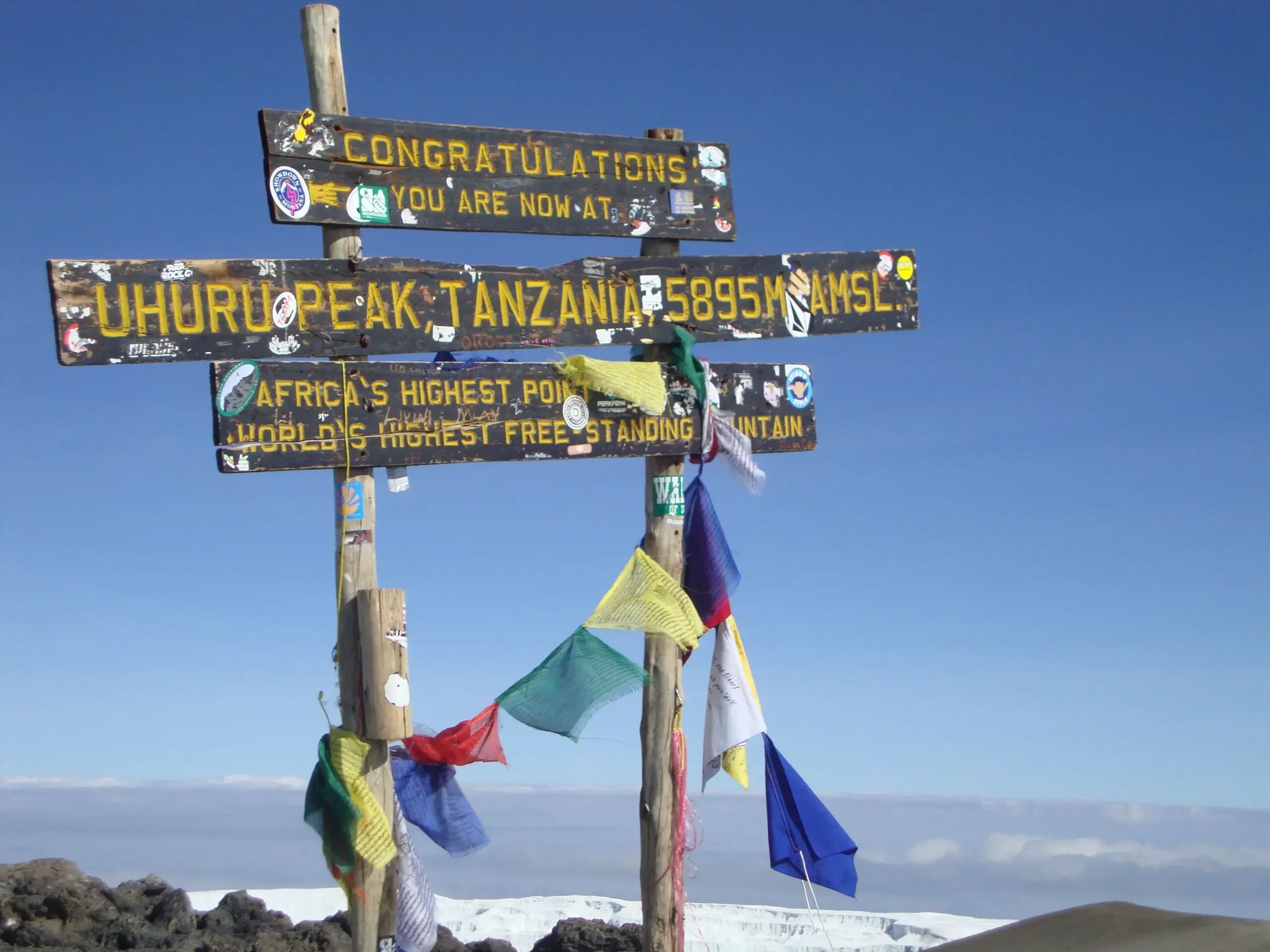
A complete guide to the fitness, altitude and experience needed to climb Africa’s highest mountain
Mount Kilimanjaro is not technically difficult on its standard trekking routes, but it is physically and mentally demanding.
You do not normally need ropes, rock-climbing skills or previous mountaineering experience to reach the summit. What you do need is the fitness to walk for several hours on consecutive days, the discipline to maintain a slow pace and the determination to continue through a long, cold summit night at extreme altitude.
At 5,895 metres above sea level, Kilimanjaro is the highest mountain in Africa. Its summit, Uhuru Peak, stands almost six kilometres above sea level and far higher than anything in the United Kingdom.
The greatest challenge is not steepness or technical climbing. It is altitude.
As you move higher, the air pressure falls and every breath delivers less oxygen to your body. A pace that would feel easy at sea level can become exhausting above 5,000 metres. Even fit, experienced trekkers may develop headaches, nausea, fatigue or other symptoms of altitude illness.
For most healthy and reasonably active people who train properly and follow a well-paced itinerary, Kilimanjaro is achievable.
However, calling it an easy mountain would be misleading.
Kilimanjaro difficulty at a glance
Summit altitude: 5,895 metres
Highest point: Uhuru Peak
Location: Northern Tanzania
Technical difficulty on standard routes: Low
Physical difficulty: Challenging
Altitude difficulty: Very high
Mental difficulty: Challenging
Typical expedition length: Approximately six to nine mountain days, depending on the route
Accommodation: Tents on most routes; huts on the Marangu Route
Previous climbing experience required: Usually none
Main challenges: Extreme altitude, consecutive trekking days, cold, reduced sleep and a very long summit attempt
Our overall assessment is:
Kilimanjaro is technically straightforward but physiologically serious. The walking is accessible; the altitude is what makes it difficult.
Is Kilimanjaro technically difficult?
The standard routes up Kilimanjaro are trekking routes rather than technical climbing routes.
Most climbers will not need to use ropes, harnesses or specialist rock-climbing techniques. There are no sustained vertical climbing sections on the normal routes, and the majority of the expedition involves walking on established mountain trails.
Depending on your route, you should expect:
Forest trails
Rocky paths
Volcanic gravel
Uneven ground
Steep uphill sections
Dust and loose scree
Possible mud at lower elevations
Cold and potentially icy terrain near the summit
Long periods of continuous walking
The Barranco Wall, included on several popular routes, looks intimidating from below but is more of a steep scramble than a technical climb. Most people move through it slowly, occasionally using their hands for balance.
The lack of technical climbing is one reason Kilimanjaro is often described as accessible to beginners.
However, this description can create false confidence.
A mountain does not need ropes or vertical cliffs to be difficult. Spending multiple days above 3,000 metres before attempting to walk through the night towards almost 6,000 metres is a serious physical undertaking.
What makes Kilimanjaro so difficult?
Kilimanjaro’s difficulty comes from several challenges combining over the course of the expedition.
1. Extreme altitude
Altitude is the defining challenge of Kilimanjaro.
At approximately 3,050 metres, the pressure of inspired oxygen is already only around 69% of its sea-level value. The available oxygen continues to decrease as you climb towards the summit at 5,895 metres.
Your body must adapt to this increasingly oxygen-poor environment.
Common effects include:
Heavier breathing
Increased heart rate
Slower walking pace
Headaches
Reduced appetite
Nausea
Fatigue
Disturbed sleep
Dizziness
Difficulty concentrating
These effects can occur even when the terrain itself is not especially steep.
At sea level, you may be able to walk quickly while holding a conversation. Near the summit of Kilimanjaro, you may need to focus on taking one slow step after another.
This is why guides constantly repeat the Swahili phrase:
Pole pole — slowly, slowly.
Walking slowly is not a sign of weakness. It is one of the most important strategies for conserving energy and allowing your body time to acclimatise.
2. The speed of the ascent
Kilimanjaro rises extremely quickly from the surrounding lowlands.
Unlike Himalayan treks where travellers may spend weeks gradually approaching high altitude, most Kilimanjaro itineraries reach almost 6,000 metres within a relatively short period.
The number of mountain days matters.
Short itineraries generally provide less time for acclimatisation, while longer routes can include a slower ascent and opportunities to climb higher during the day before sleeping lower.
The CDC advises that gradual ascent is the best way to reduce the risk of altitude illness. Travellers should avoid ascending further when experiencing symptoms and should descend if symptoms worsen despite rest.
No itinerary removes altitude risk completely, but giving the body more time to adapt can improve both safety and comfort.
3. Consecutive days of trekking
Kilimanjaro is not simply one difficult hike.
You will walk for several hours each day, often for nearly a week or longer, depending on the route. Even when an individual day feels manageable, the accumulated fatigue gradually increases.
Each morning, you need to:
Get out of your sleeping bag
Pack your personal equipment
Eat despite a reduced appetite
Put your boots back on
Walk again with tired legs
Gain more altitude
Sleep in colder and thinner air
A person who can complete one long hike may still struggle with repeating the effort day after day.
This is why training should include endurance, leg strength and occasional back-to-back sessions rather than focusing only on short, intense workouts.
4. Summit night
For most people, summit night is the hardest part of Kilimanjaro.
The summit attempt normally begins late at night. Climbers leave camp in darkness, wearing multiple layers and following a line of headtorches slowly up the mountain.
Depending on the route and the group’s pace, you may walk for six or more hours before reaching the crater rim and then continue towards Uhuru Peak.
The challenge is created by several factors arriving simultaneously:
Very little sleep
Freezing temperatures
Darkness
Extreme altitude
Steep volcanic scree
Slow progress
Physical exhaustion
Reduced appetite
Mental fatigue
Several more hours of descent after summiting
The final ascent can feel repetitive. You take a few steps, breathe, continue and repeat.
The summit may seem close while still requiring a substantial amount of effort.
Reaching Stella Point or Gilman’s Point does not necessarily mean the walking is finished. From the crater rim, climbers may still need to continue towards Uhuru Peak, the mountain’s highest point.
Then comes the descent.
Many people reach the summit believing the hardest part is over, only to discover that they still have hours of downhill walking ahead of them.
5. The cold
Kilimanjaro begins in a warm environment but finishes in alpine conditions.
During the expedition, you pass through several ecological zones, moving from cultivated land and mountain forest through heath and moorland into high alpine desert and the arctic summit zone.
Temperatures can vary dramatically between daytime and night.
Near the summit, you should be prepared for:
Sub-zero temperatures
Strong wind
Frozen water bottles
Numb fingers
Cold feet
Ice or snow
Rapid heat loss when stationary
Wind chill can make the temperature feel significantly colder than the thermometer suggests.
A suitable layering system is essential. You need enough insulation to stay warm without becoming soaked in sweat during the climb.
6. Basic mountain living
For many guests, Kilimanjaro is their first experience of camping for nearly a week.
The physical challenge is made harder by the realities of expedition life:
Sleeping in a tent
Limited washing facilities
Cold nights
Early starts
Repacking your equipment every morning
Eating when you are not hungry
Using basic mountain toilets
Dust, mud and changing weather
Sharing camp with a large mountain crew
None of these things is individually extreme, but they can gradually wear people down.
A positive attitude and realistic expectations make a significant difference.
Can beginners climb Kilimanjaro?
Yes. Many people successfully climb Kilimanjaro without previous mountaineering or high-altitude experience.
However, it is suitable for a prepared beginner, not an unprepared one.
You may be a suitable beginner if you:
Exercise regularly
Can walk for several hours
Are willing to train consistently
Can tolerate basic camping
Are comfortable following instructions
Understand that the summit is not guaranteed
Can maintain a patient, controlled pace
Are prepared for cold and discomfort
Communicate honestly about symptoms
You do not need to be an elite athlete.
You do need enough endurance to continue walking on tired legs and enough discipline to avoid treating the mountain like a race.
A beginner who trains for several months and follows a sensible itinerary may perform better than an experienced athlete who arrives overconfident and ascends too quickly.
How fit do you need to be for Kilimanjaro?
You should have a good general level of cardiovascular fitness, leg endurance and resilience.
You do not need to run marathons or lift enormous weights. The most important ability is to walk slowly for several hours, recover overnight and repeat the process the following day.
A useful benchmark is being able to complete a six- to eight-hour hilly walk while carrying a light daypack and remain capable of exercising again the next day.
You should ideally be comfortable with:
Five or more hours of steady movement
Long uphill sections
Consecutive days of activity
Carrying a light backpack
Walking in poor weather
Eating and drinking during exercise
Continuing when tired
Maintaining balance on loose terrain
Fitness cannot protect you completely from altitude illness, but it gives you a stronger physical foundation for managing the workload.
A simple Kilimanjaro fitness test
Before travelling, aim to complete the following:
Walk for at least six hours on hilly terrain.
Carry a daypack weighing approximately 5–7 kilograms.
Gain a meaningful amount of elevation during the walk.
Finish without severe knee, foot or back pain.
Complete another moderate walk the following day.
Maintain a steady pace without repeated exhaustion.
Eat and hydrate while moving.
Passing this test does not guarantee a summit because it cannot reproduce the altitude.
It does show that your basic hiking endurance is moving in the right direction.
Do you need previous hiking experience?
Previous experience is strongly recommended, but it is not always essential.
You should not arrive in Tanzania having never:
Never worked on your fitness
Worn your hiking boots for several hours
Carried your daypack
Used trekking poles
Walked in rain
Hiked uphill for a sustained period
Managed blisters or hot spots
Adjusted clothing layers
Exercised on consecutive days
Training hikes teach you much more than fitness.
They help you understand how your equipment fits, how your body responds to long days and which small issues could become major problems on the mountain.
You want to discover that your boots cause blisters during a training walk at home—not at 4,000 metres.
Does being very fit make Kilimanjaro easy?
No.
Being fit makes the physical workload more manageable, but it does not make you immune to altitude illness.
Highly trained runners, climbers and athletes can still struggle with headaches, nausea or poor acclimatisation.
Fitness can sometimes create an additional problem: strong athletes may walk too quickly.
A fast pace can increase fatigue and reduce the time your body has to adjust to altitude. Kilimanjaro rewards patience more than speed.
The correct pace may feel unusually slow during the first few days.
That is intentional.
How does altitude affect the body?
At high altitude, reduced air pressure means less oxygen is available with each breath.
Your body responds by:
Increasing your breathing rate
Increasing your heart rate
Producing more urine
Altering fluid balance
Gradually increasing red-blood-cell production
Redirecting energy towards adaptation
These changes take time.
Mild acute mountain sickness commonly presents with a headache alongside symptoms such as nausea, dizziness, fatigue or disturbed sleep.
More serious conditions include high-altitude cerebral oedema and high-altitude pulmonary oedema.
Warning signs can include:
Confusion
Loss of coordination
Inability to walk in a straight line
Breathlessness while resting
Severe weakness
Persistent coughing
Rapid deterioration
Confusion and poor coordination can indicate high-altitude cerebral oedema, while breathlessness at rest can indicate life-threatening high-altitude pulmonary oedema. Both require immediate action and descent.
Never hide symptoms because you are afraid of being turned around.
Your guide needs accurate information to protect you.
Is altitude sickness guaranteed?
No.
Some people experience only mild symptoms, while others struggle considerably. It is impossible to predict perfectly who will be affected.
Previous success at altitude is encouraging but does not guarantee that you will respond the same way during a future climb.
Risk is influenced by:
How quickly you ascend
The height at which you sleep
Individual susceptibility
Your itinerary
Your health
Whether symptoms are recognised early
Whether you continue ascending while unwell
Fitness, age and determination cannot guarantee acclimatisation.
The best approach is a gradual itinerary, slow walking, good hydration, sufficient food, rest and honest communication with the guide team.
Can medication prevent altitude sickness?
Some travellers are prescribed acetazolamide, commonly known by the brand name Diamox, to help prevent or reduce altitude illness.
It should not be treated as a substitute for a sensible itinerary or careful monitoring.
Acetazolamide is a prescription medication and may not be appropriate for everyone. Travellers should discuss their route, medical history and any existing medication with a qualified clinician or travel-health specialist before departure.
Do not begin taking medication based solely on advice from social media, another climber or an online forum.
Dexamethasone and other medications may be used in particular medical situations, but they require professional guidance and do not replace descent when a person develops serious altitude illness.
How long does it take to climb Kilimanjaro?
The length of the climb depends on the chosen route and itinerary.
Many expeditions spend approximately six to nine days on the mountain.
A longer route is not automatically easy, but additional days can provide:
More gradual altitude gain
Better opportunities for acclimatisation
Shorter daily stages
More recovery time
A less rushed experience
More time to enjoy the changing landscapes
The mountain should not be treated as something to complete in the shortest possible time.
When selecting an itinerary, summit success should not be the only consideration. Safety, acclimatisation, crew welfare and overall experience matter as well.
Which Kilimanjaro route is the easiest?
There is no genuinely easy route to 5,895 metres.
Different routes offer different advantages.
Lemosho Route
Lemosho is known for its varied scenery and a more gradual approach from the western side of the mountain.
Longer Lemosho itineraries are often chosen because they provide additional acclimatisation time before summit night.
The route eventually joins the southern circuit and normally includes the Barranco Wall.
Machame Route
Machame is one of Kilimanjaro’s best-known routes.
It offers dramatic scenery and a varied trail but can feel busy during popular periods. It also includes the southern circuit and Barranco Wall.
Marangu Route
Marangu is the only major route using mountain huts rather than tents.
It is sometimes presented as the easiest option because of the hut accommodation and comparatively direct trail. However, shorter Marangu itineraries can provide limited acclimatisation time, and the direct ascent should not be underestimated.
Rongai Route
Rongai approaches from the north near the Kenyan border.
It can be quieter and often experiences different weather patterns from the southern routes. The scenery is generally more gradual and open during the early stages.
Northern Circuit
The Northern Circuit is one of the mountain’s longest routes.
It circles around the quieter northern side and can offer extensive acclimatisation time, although it requires more days and a greater overall time commitment.
Umbwe Route
Umbwe is steep, direct and generally considered more demanding.
It is not normally the first choice for an inexperienced high-altitude trekker.
The best route is not simply the one with the fewest kilometres. The itinerary, altitude profile, group pace and number of days are more important than distance alone.
What is the Barranco Wall like?
The Barranco Wall is one of the most photographed sections of Kilimanjaro.
From camp, it appears almost vertical. In reality, the route follows a steep, winding scramble through the rock.
You will occasionally use your hands for balance, and some sections require careful foot placement. Guides position themselves throughout the route to assist climbers.
For most people, it is more enjoyable than frightening.
There is no need for technical climbing equipment under normal conditions, although anyone with a severe fear of heights may find certain sections uncomfortable.
The wall can become congested when multiple groups arrive simultaneously, so patience is important.
What is summit night really like?
Summit night is long, cold and mentally demanding.
Most people eat an early dinner and attempt to rest for a few hours. Sleep may be difficult because of altitude, nerves and the early start.
You then wake, dress in your warmest layers and begin walking during the night.
The pace is extremely slow.
The trail climbs through loose volcanic material, and the beam of your headtorch reveals only the ground immediately in front of you.
You may feel:
Cold
Tired
Breathless
Slightly nauseous
Frustrated by the pace
Emotionally overwhelmed
Unsure how much farther remains
The guides control the rhythm, monitor the group and encourage everyone to keep moving.
As dawn approaches, the horizon begins to brighten. Many climbers reach the crater rim around sunrise before continuing towards Uhuru Peak.
The final section can feel deceptively long because you are already exhausted and moving at extreme altitude.
At the summit, most groups spend only a limited amount of time taking photographs before beginning the descent.
The descent is significantly faster, but it is still physically demanding.
After returning to camp, you may rest briefly before descending farther down the mountain.
For many people, summit day becomes the longest physical day of their life.
What is the hardest part of Kilimanjaro?
Different people struggle with different stages.
The final hours before the crater rim
The terrain is repetitive, the air is thin and the summit can feel impossibly far away.
Maintaining appetite
Altitude can suppress hunger, but your body still needs fuel. Failing to eat makes weakness and fatigue worse.
Sleeping
Cold temperatures, basic camping and altitude can make restorative sleep difficult.
The descent
After focusing entirely on the summit, many climbers underestimate how far they still need to walk downhill.
The mental battle
The mountain gives you many opportunities to question yourself.
Success often comes from breaking the challenge into small pieces rather than thinking about the entire summit night.
Walk to the next visible rock.
Take another ten steps.
Drink.
Breathe.
Continue.
How should you train for Kilimanjaro?
Most people benefit from at least three to four months of structured training.
Someone beginning with a low fitness level may require longer.
Your programme should develop four main qualities.
Cardiovascular endurance
You need the ability to exercise steadily for several hours.
Useful activities include:
Hill walking
Incline treadmill walking
StairMaster sessions
Running
Cycling
Rowing
Swimming
Long-distance walking
Running is useful, but it should not completely replace hiking.
The mountain requires time on your feet more than speed.
Leg strength
Strength training makes the repeated uphill and downhill movement more manageable.
Useful exercises include:
Squats
Split squats
Step-ups
Walking lunges
Romanian deadlifts
Calf raises
Controlled step-downs
Glute bridges
Use controlled technique and gradually build volume.
Hiking-specific endurance
Complete increasingly long walks while wearing your boots and carrying your daypack.
Whenever possible, train on hills rather than flat pavements.
Consecutive-day training
Kilimanjaro requires repeated effort.
Occasionally complete a longer walk on Saturday followed by another moderate session on Sunday.
This teaches your body to perform before it feels completely recovered.
Read our complete Kilimanjaro Training Plan for a structured programme.
How heavy will your backpack be?
Most guests carry a small daypack rather than all their expedition equipment.
Your daypack will usually contain items such as:
Water
Waterproof jacket
Warm layer
Snacks
Sunscreen
Sunglasses
Camera
Personal medication
Hat and gloves
Small personal essentials
Your larger duffel bag is normally carried by porters, subject to the operator’s permitted weight limit.
You should still train while carrying your daypack. A few kilograms can feel much heavier after several hours at altitude.
Responsible operators should protect porter welfare, enforce load limits and maintain transparent pay and tipping procedures. The Kilimanjaro Porters Assistance Project monitors operators against standards covering wages, meals, accommodation, tipping and a maximum company-gear load of 20 kilograms per porter.
What equipment do you need for Kilimanjaro?
Your final packing list should be based on your route, season and operator guidance.
Typical essentials include:
Worn-in hiking boots
Comfortable hiking socks
Small daypack
Waterproof jacket
Waterproof trousers
Moisture-wicking base layers
Hiking trousers
Warm fleece or midlayer
Insulated down or synthetic jacket
Thermal leggings
Warm hat
Sun hat
Lightweight gloves
Insulated summit gloves or mittens
Sunglasses
High-factor sunscreen
Headtorch with spare batteries
Water bottles or hydration system
Trekking poles
Warm sleeping bag
Duffel bag
Personal medication
Toiletries
Power bank
Snacks
Dry bags or waterproof packing liners
The mountain may be warm during the lower stages and bitterly cold near the summit, so layering is more effective than relying on one enormous jacket.
Read our complete Kilimanjaro Packing List before purchasing equipment.
What boots should you wear?
Choose comfortable, supportive and thoroughly worn-in hiking boots.
Important features include:
Reliable grip
Comfortable ankle support
Enough room for thicker socks
Toe space for long descents
Water resistance
No heel lifting
Compatibility with your foot shape
Your boots do not need to be the most expensive available.
They need to fit properly.
Wear them during multiple long training walks. Test them while walking uphill and downhill, because footwear that feels comfortable on flat ground may crush your toes during descents.
Do not arrive with boots that have never been worn outdoors.
Are trekking poles necessary?
They are not mandatory, but they are strongly recommended.
Trekking poles can:
Improve balance
Reduce strain on the knees
Provide stability on loose ground
Help establish a consistent rhythm
Assist during long descents
Reduce the risk of slipping when tired
Practise using them before the expedition.
Poles are most effective when they feel like a natural extension of your walking rather than unfamiliar equipment.
How much water should you drink?
Hydration is important, but more is not always better.
Your guides will give route-specific advice based on the conditions and water availability.
Drink regularly throughout the day and monitor the colour of your urine. Very dark urine can indicate dehydration, while forcing excessive amounts of plain water can also create medical problems.
Altitude, cold air, sun exposure and physical exertion all increase your fluid requirements.
Electrolytes can be useful, particularly for people who sweat heavily, but they should complement rather than replace food and sensible hydration.
What should you eat on Kilimanjaro?
Your body requires carbohydrates, protein, fats and sufficient total calories.
At altitude, appetite often falls at the same time that energy demand rises.
Mountain meals commonly include:
Porridge
Eggs
Bread
Fruit
Soup
Rice
Pasta
Potatoes
Vegetables
Meat or beans
Tea and hot drinks
Bring a selection of familiar snacks that you genuinely enjoy.
Useful options include:
Energy bars
Sweets
Dried fruit
Nuts
Crackers
Electrolyte tablets
Gels or chews for summit night
Do not rely entirely on unfamiliar specialist sports food.
When nausea or exhaustion appears, familiar food is often easier to eat.
Is Kilimanjaro harder than Mount Toubkal?
Yes, Kilimanjaro is generally a considerably greater challenge.
Mount Toubkal reaches 4,167 metres, while Kilimanjaro reaches 5,895 metres.
Kilimanjaro involves:
More days of trekking
Greater altitude
A longer summit attempt
More consecutive days on the mountain
Colder summit conditions
More camping
A larger overall physical and mental commitment
Toubkal can be an excellent introduction to high-altitude trekking, but Kilimanjaro is a substantial step up.
Successfully climbing Toubkal is useful preparation. It does not guarantee that Kilimanjaro will feel easy.
If your plan is to summit Kilimanjaro with us and you’d first like summit Toubkal to prepare yourself, please contact us directly at TarzanExpeditions@gmail.com and we will work out a deal for you to join both expeditions.
Is Kilimanjaro harder than Everest Base Camp?
The two challenges are difficult in different ways.
Everest Base Camp is a much longer trek, typically involving many more days of walking. However, its gradual approach can provide more time for acclimatisation.
Kilimanjaro is shorter but reaches a higher point and involves a severe summit-night push.
A simplified comparison is:
Kilimanjaro
Higher maximum altitude
Shorter overall expedition
Faster ascent
Harder single summit day
More intense final challenge
Everest Base Camp
Longer trek
More total days on foot
Greater cumulative fatigue
More gradual acclimatisation
No equivalent overnight push to nearly 6,000 metres on the standard trek
Neither should be treated casually.
Is Kilimanjaro harder than a marathon?
They are difficult in completely different ways.
A marathon is faster, more intense and normally completed within a single day.
Kilimanjaro is slower but involves:
Multiple consecutive days
Extreme altitude
Camping
Cold
Sleep disruption
A very long summit attempt
Cumulative fatigue
A strong marathon runner may still struggle with altitude.
Someone who cannot run a marathon may still climb Kilimanjaro successfully after appropriate hiking-specific training.
Can older adults climb Kilimanjaro?
Age alone does not determine whether someone can climb.
Many older adults successfully reach the summit, while some younger people struggle.
More important considerations include:
Cardiovascular health
Joint health
Mobility
Recovery ability
Previous trekking experience
Current fitness
Existing medical conditions
Medication
Acclimatisation profile
Anyone with cardiovascular, respiratory or other significant medical concerns should consult an appropriate clinician before booking.
A longer itinerary and conservative pacing may be particularly valuable for older trekkers.
Can children climb Kilimanjaro?
Some children have climbed Kilimanjaro, but the altitude makes this a serious decision.
Children are susceptible to altitude illness just as adults are. Younger children may have difficulty recognising or clearly explaining symptoms such as headaches, dizziness or nausea. Slow ascent is preferable, and unexplained symptoms after gaining altitude may require descent.
Parents should consider:
The child’s age
Previous hiking experience
Ability to communicate symptoms
Emotional maturity
Tolerance of cold and camping
Genuine personal motivation
The route and itinerary
Medical advice
Local park and operator requirements
No child should feel responsible for achieving the summit for a parent, charity or social-media story.
The ability to turn around without pressure is essential.
Is Kilimanjaro dangerous?
Kilimanjaro is accessible, but it is still a high-altitude mountain.
Potential hazards include:
Acute mountain sickness
High-altitude cerebral oedema
High-altitude pulmonary oedema
Hypothermia
Dehydration
Falls
Exhaustion
Gastrointestinal illness
Sun exposure
Severe weather
Poorly managed guides or operators
The most common serious mountain risk for climbers in East Africa is altitude illness. Climbers should check that their guides are trained to recognise altitude problems and equipped to respond appropriately.
Risk is reduced by:
Choosing a reputable operator
Following a gradual itinerary
Training properly
Wearing appropriate equipment
Communicating symptoms
Following guide instructions
Maintaining a slow pace
Carrying appropriate insurance
Being willing to descend
Before travelling, UK guests should read the current FCDO advice for Tanzania and ensure that their insurance covers high-altitude trekking, emergency treatment and evacuation. FCDO advice is regularly updated and should be checked again shortly before departure.
What happens if you cannot reach the summit?
You turn around.
That is not failure.
A safe expedition must always prioritise the wellbeing of the individual and the group over reaching the summit.
You may need to descend because of:
Altitude symptoms
Injury
Exhaustion
Severe weather
Equipment problems
A guide’s safety decision
Another medical issue
No reputable operator should guarantee that every guest will summit.
The mountain will still be there.
Your family would rather hear that you made a responsible decision than discover that you ignored dangerous symptoms for a photograph.
Reaching 4,500 or 5,000 metres is already an extraordinary achievement.
What increases your chance of reaching the summit?
There is no single secret, but several factors improve your chances.
Choose a sensible itinerary
More acclimatisation time is generally preferable to rushing.
Train consistently
Build endurance, leg strength and hiking experience before departure.
Walk slowly
Do not race guides, porters or other guests.
Eat even when appetite falls
Your body needs energy to adapt and continue moving.
Drink regularly
Avoid both dehydration and forced overhydration.
Protect your sleep
Use a warm sleeping bag, comfortable mat and earplugs.
Communicate symptoms early
Small issues are easier to manage before they become serious.
Look after your feet
Treat hot spots immediately rather than waiting for blisters.
Stay mentally flexible
Weather, pace and personal performance may differ from your expectations.
Accept that turning around is possible
Removing the idea that you must summit at any cost leads to better decisions.
Our honest verdict: how hard is Kilimanjaro?
Kilimanjaro is one of the most accessible major high-altitude mountains in the world, but it is not an easy walk.
Its standard routes are technically straightforward, and most healthy people do not require climbing experience.
The real difficulty comes from:
Reaching 5,895 metres
Ascending within a relatively short period
Walking for several consecutive days
Sleeping at altitude
Coping with cold and basic camping
Completing a long overnight summit attempt
Descending on exhausted legs
We would rate Kilimanjaro as:
Technical difficulty: 2/5
Physical difficulty: 4/5
Altitude difficulty: 4.5/5
Mental difficulty: 4/5
Overall: Challenging
A healthy and reasonably active beginner who trains properly, chooses a sensible itinerary and follows the guide team has a realistic chance of reaching Uhuru Peak.
An unprepared person who assumes that “non-technical” means easy may have a very different experience.
Kilimanjaro does not require you to be superhuman.
It requires patience, preparation, humility and the willingness to keep taking one slow step after another.
Frequently asked questions
Can a complete beginner climb Kilimanjaro?
Yes, provided they train properly, select an appropriate route and understand the effects of altitude. Previous mountaineering experience is not normally required on the standard trekking routes.
Do you need rock-climbing experience?
No. Kilimanjaro is normally climbed as a trek rather than a technical rock climb.
Do you need ropes?
Ropes are not normally used by guests on the standard routes under ordinary conditions.
Do you need crampons?
Crampons are not normally required on the standard trekking routes, although mountain conditions can vary. Follow the current advice of your operator and guides.
How high is Kilimanjaro?
Uhuru Peak reaches 5,895 metres and is the highest point in Africa.
How many days does it take?
Most standard itineraries spend approximately six to nine days on the mountain, depending on the route.
What is the hardest day?
Summit day is normally the hardest. It begins during the night and can involve many hours of ascent followed by a long descent.
Will I get altitude sickness?
It is impossible to predict. Anyone can experience altitude illness regardless of age, fitness or previous performance.
Is the summit guaranteed?
No. Weather, altitude symptoms, injury, illness and guide decisions can all prevent a safe summit.
Can you shower on Kilimanjaro?
Full showers are generally not available on the mountain. Guests usually wash using warm water provided at camp or personal wipes.
Are there toilets?
Toilet facilities vary by route and operator. Public mountain toilets are basic, while some operators provide private portable toilets at camp.
Is there phone signal?
Signal may be available at certain points but is unreliable. Guests should not depend on maintaining regular communication throughout the climb.
How cold does the summit get?
Temperatures can fall well below freezing, especially when wind chill is included. Exact conditions vary by season, weather and time of day.
Is Kilimanjaro suitable for people afraid of heights?
Most of the route involves normal trekking. The Barranco Wall may feel exposed in places, but it is not a vertical technical climb.
Do porters carry everything?
Porters normally carry your main duffel within the permitted weight allowance. You carry your own daypack containing water, layers and daily essentials.
Ready to climb Kilimanjaro?
Kilimanjaro is more than the highest mountain in Africa.
It is a journey through rainforest, moorland, alpine desert and frozen summit terrain. It is waking before sunrise, watching a line of headtorches disappear into the darkness and discovering how much determination exists inside you when every step feels difficult.
Then, after days of climbing, you stand at Uhuru Peak above the clouds at 5,895 metres.
Join theTarzan Expeditions Kilimanjaro Expedition and take on one of the world’s greatest trekking challenges as part of a small, supportive group.
Your Kilimanjaro experience includes:
A professionally organised Kilimanjaro ascent
Experienced local mountain guides
A dedicated porter and mountain crew
A carefully planned route and itinerary
Mountain accommodation and meals
Preparation guidance before departure
A small-group environment
The opportunity to stand on the roof of Africa
Optional all inclusive 2 day safari
[VIEW THE KILIMANJARO EXPEDITION]
travel insurance
All guests must have suitable travel insurance that covers trekking and adventure activities. We recommend True Traveller because it's designed for adventure travel and we've partnered with them to offer cover.